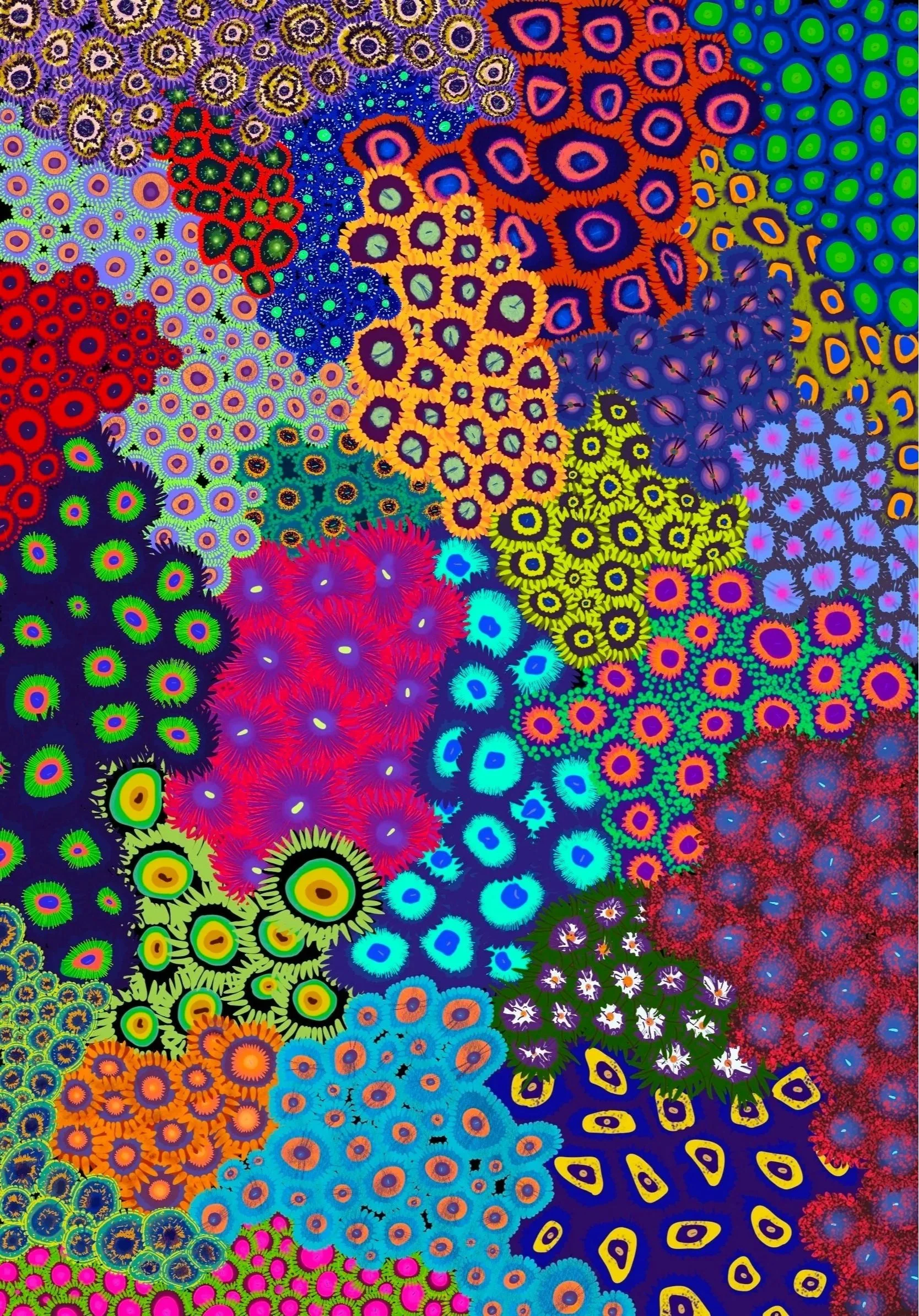
Zoanthids
Discovery
Zoas are not attributed to a single “discovery date” due to wide distribution and early recognition in marine biology, they are studied extensively in modern marine science and aquarium trade literature
Zoa Garden
Behavior
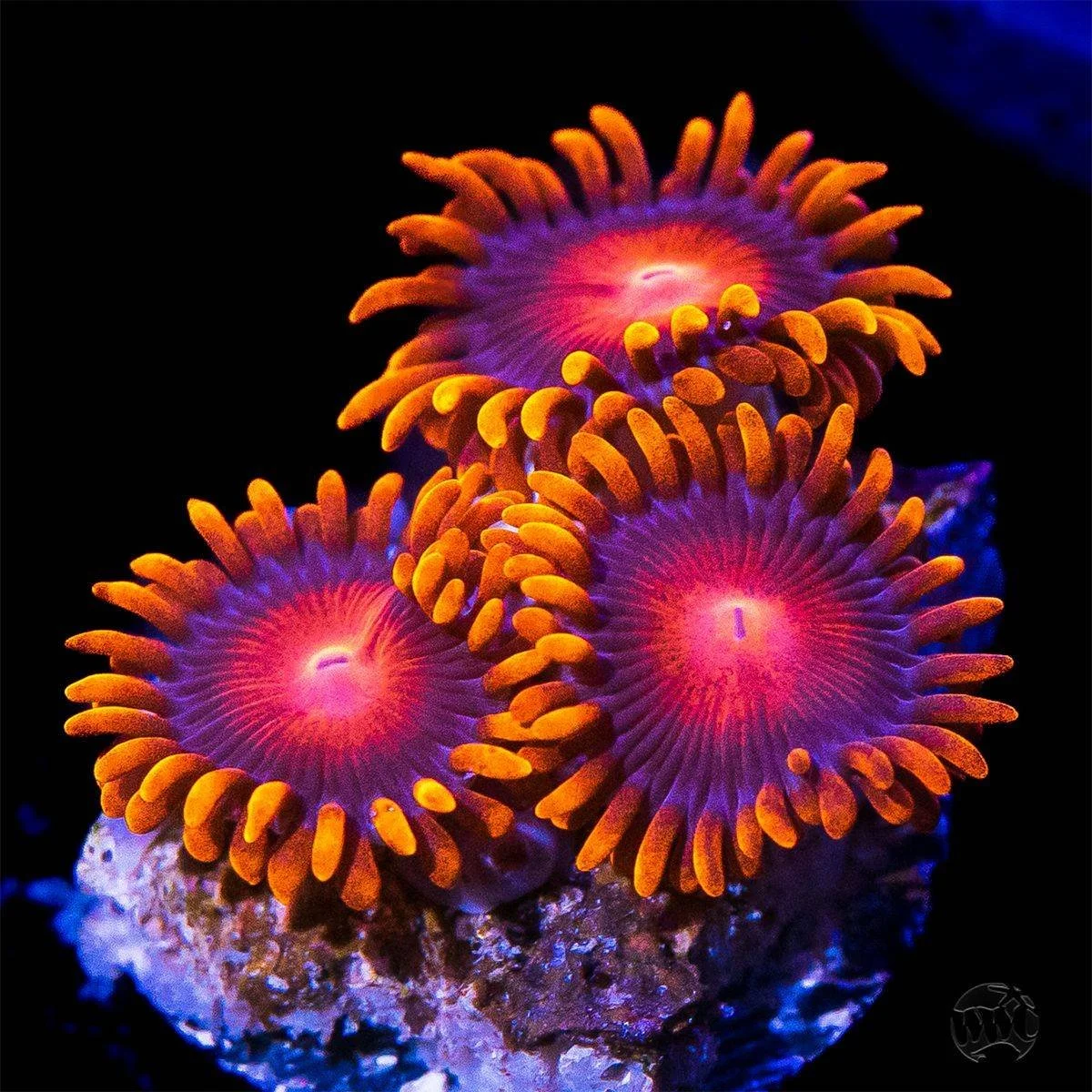
Zoanthids are colonial and sessile (fixed in place) and can reproduce rapidly under favorable conditions. They open and close in response to light, water flow and disturbance. Zoanthids produce palytoxin, one of the most potent naturally occurring toxins known, this serves as a defense against predators.
Habitat
Zoanthids are found in oceans worldwide, especially in Tropical Indo-Pacific and Caribbean reefs, as well as most subtropical coastal waters. They are widely scattered across both shallow and deeper reef environments. They attach to hard surfaces and can form large colonies over time.
Common Name
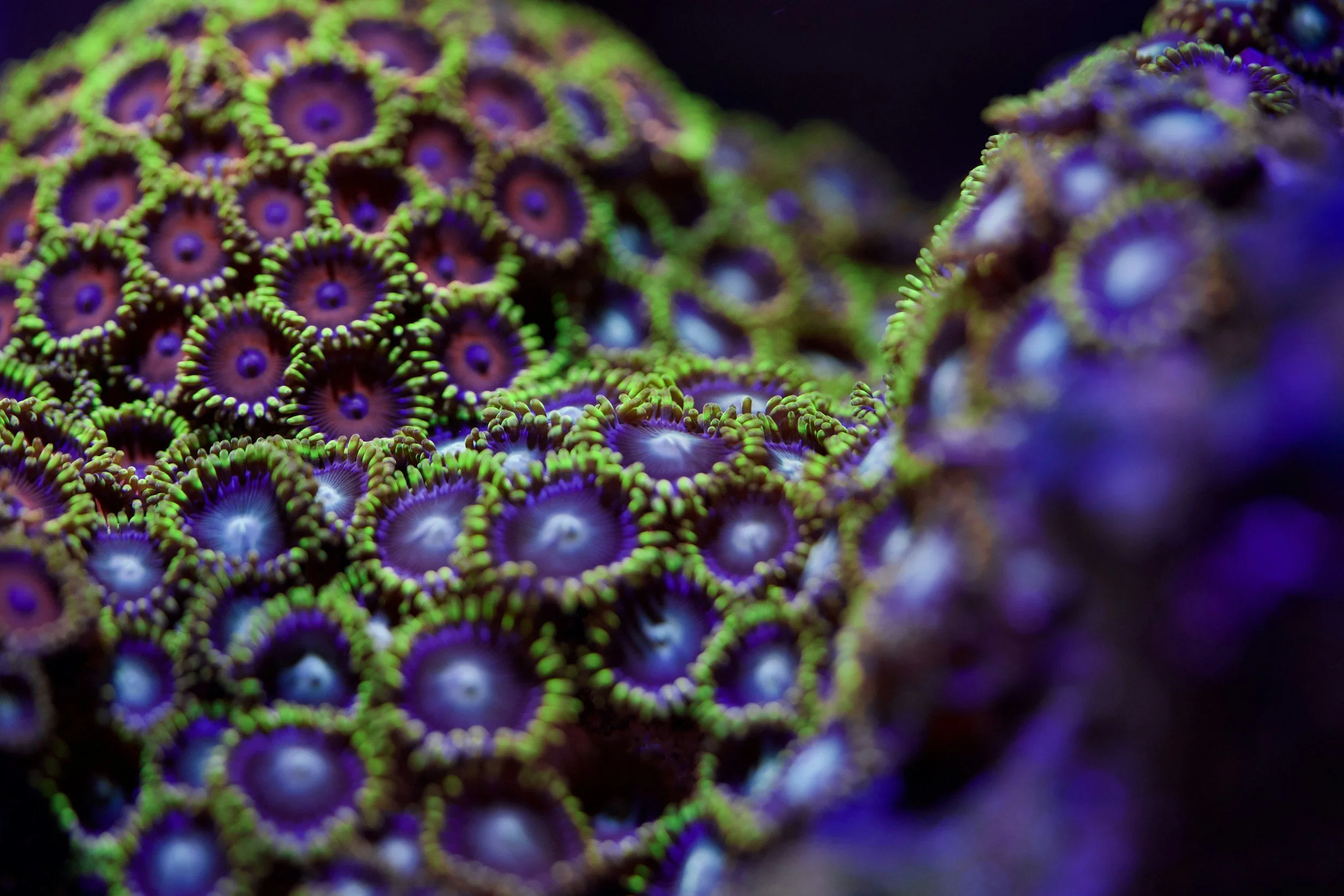
Zoanthids, Zoas, or Button Polyps
Scientific Name
Zoantharia
Classification
Phylum: Cnidaria
Class: Anthozoa
Order: Zoantharia
Diet
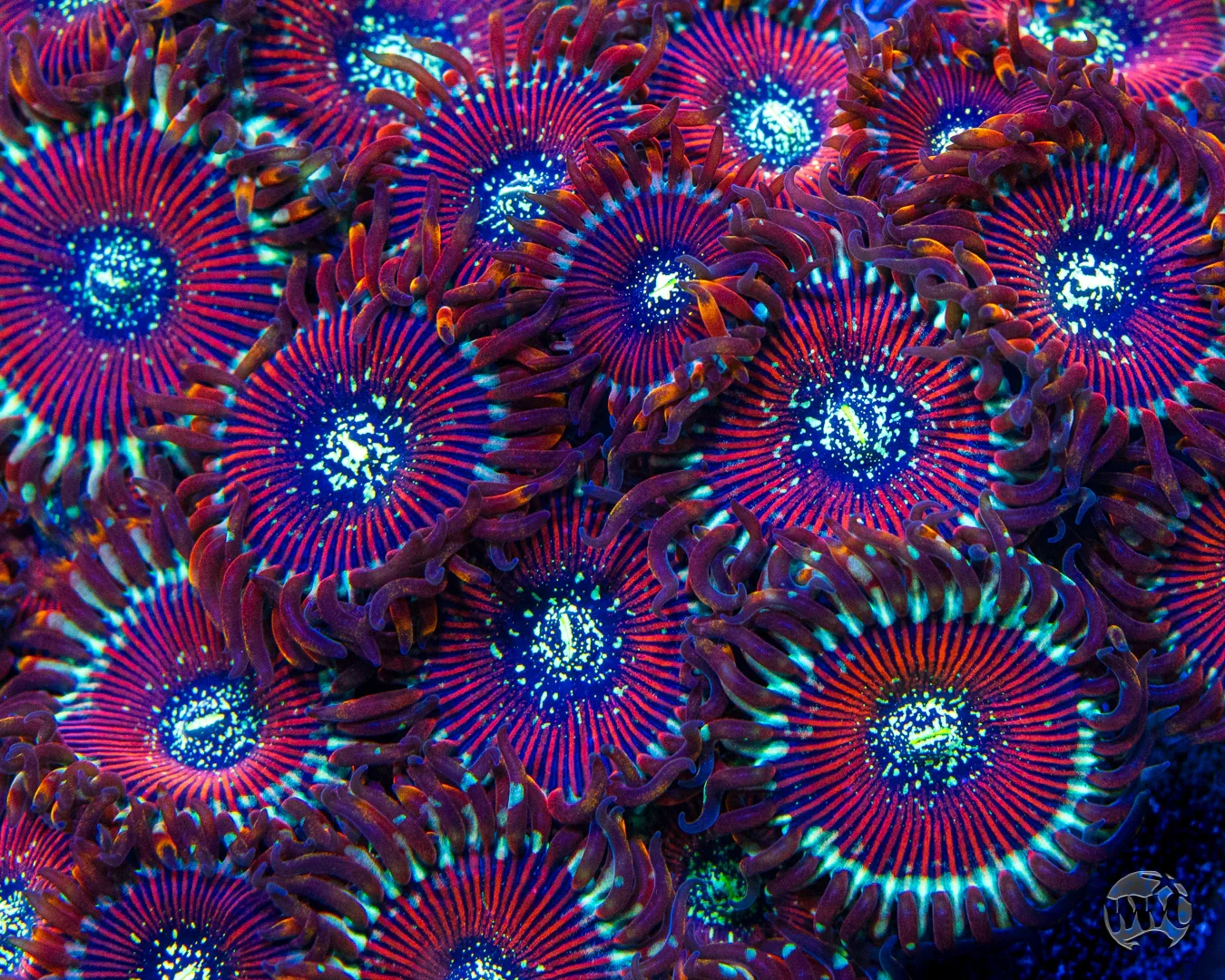
Zoanthids are partially photosynthetic and carnivorous. They obtain nutrients from symbiotic zooxanthellae algae, plankton and dissolved organic matter in the water.
Size
Zoas’ individual polyps tend to be 0.1–1 inch, but colonies can grow to cover large areas of reef substrate.
Lifespan
Individual polyps are potentially long-living in stable conditions, and the colonies themselves can persist for many years and continuously expand.
Conservation Status
Population status is not individually assessed for many species and are generally not considered threatened due to wide distribution. Although, local reef health impacts can affect colony health.