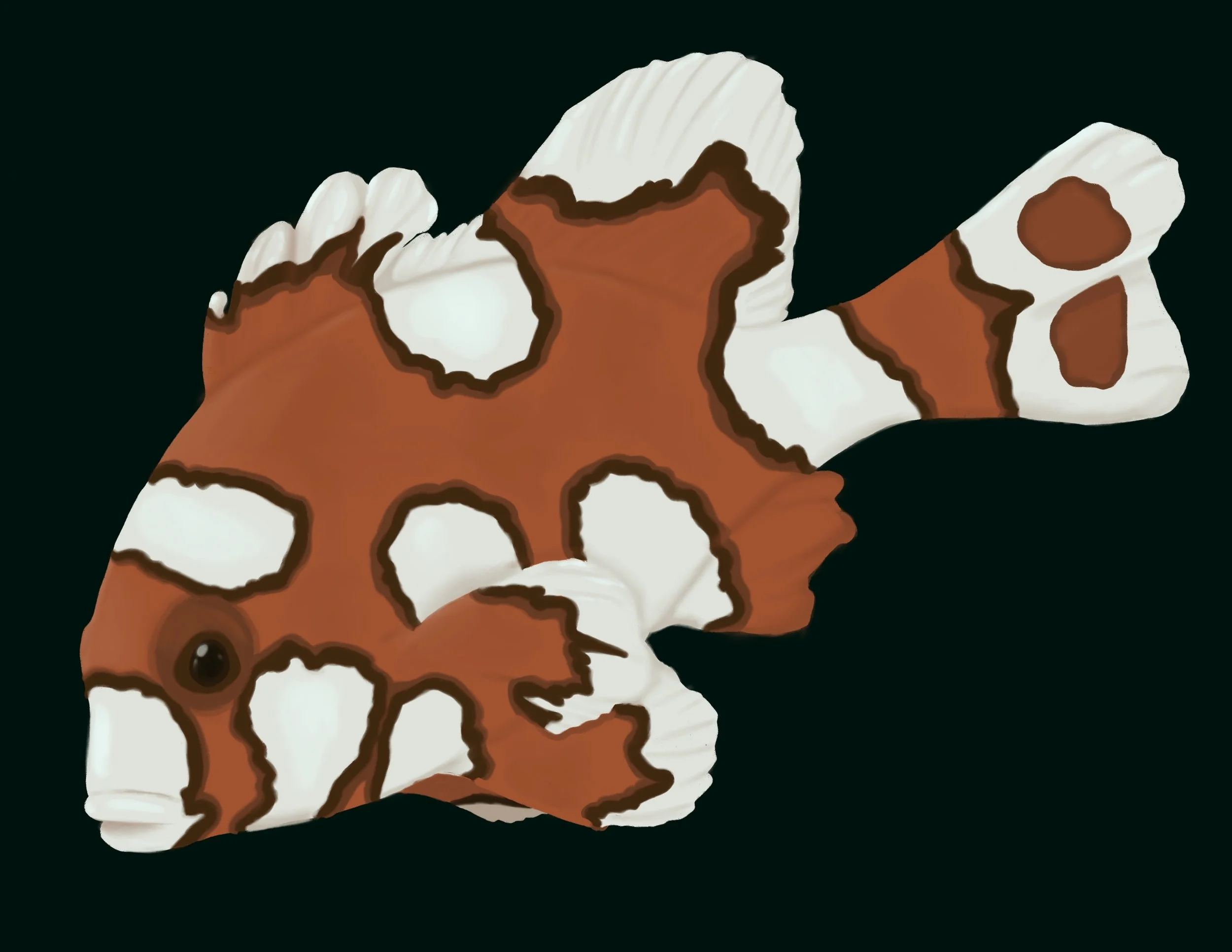
Spotted Sweet Lips
Discovery
Spotted sweetlips were first scientifically described in 1830 by French naturalist Georges Cuvier. Due to the dramatic differences between juvenile and adult coloration, early scientists initially believed the different life stages were separate species. Continued observation later revealed the opposite.
Spotted Sweet Lips
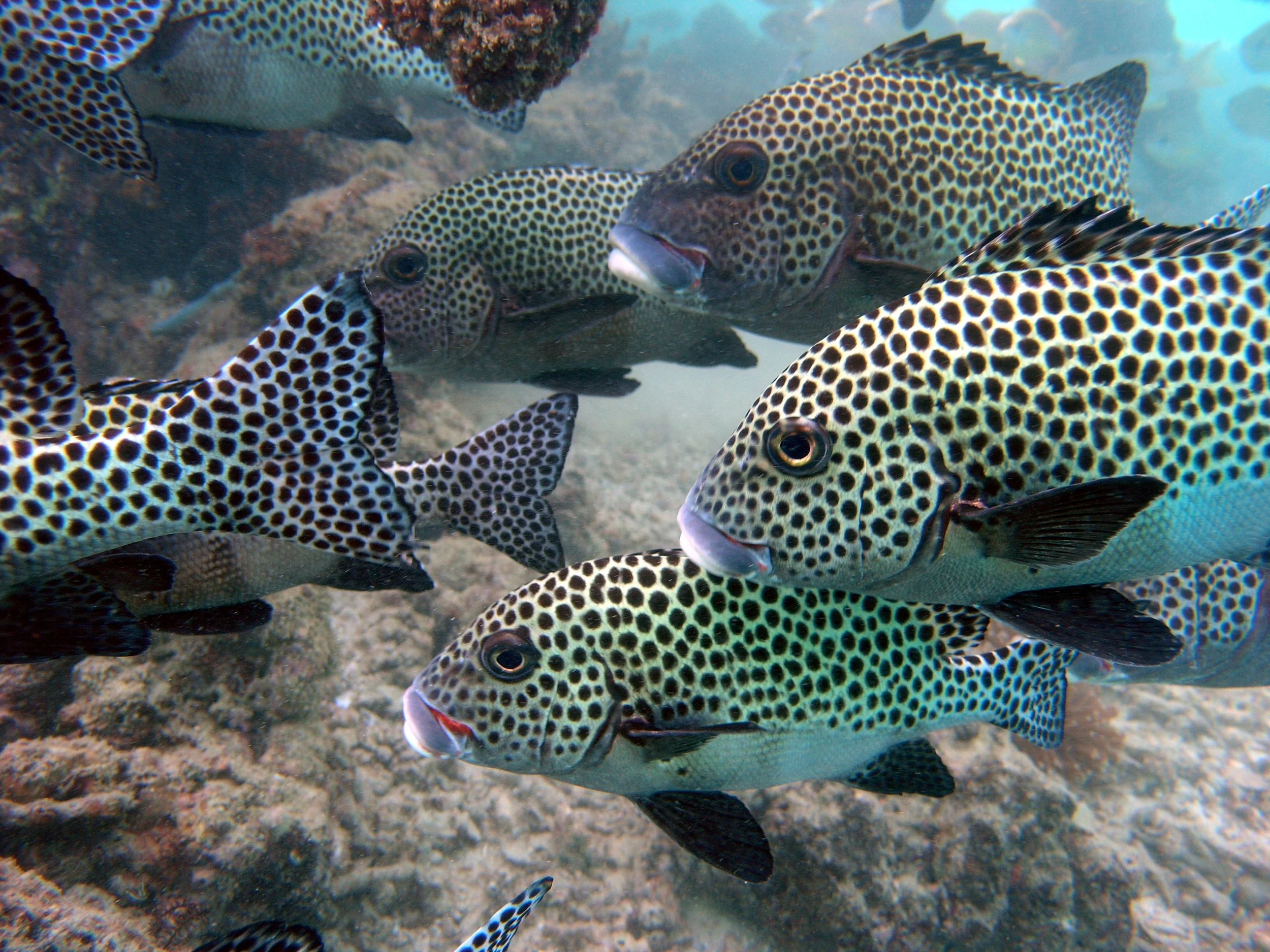
Adult Spotted Sweet Lips
Behavior
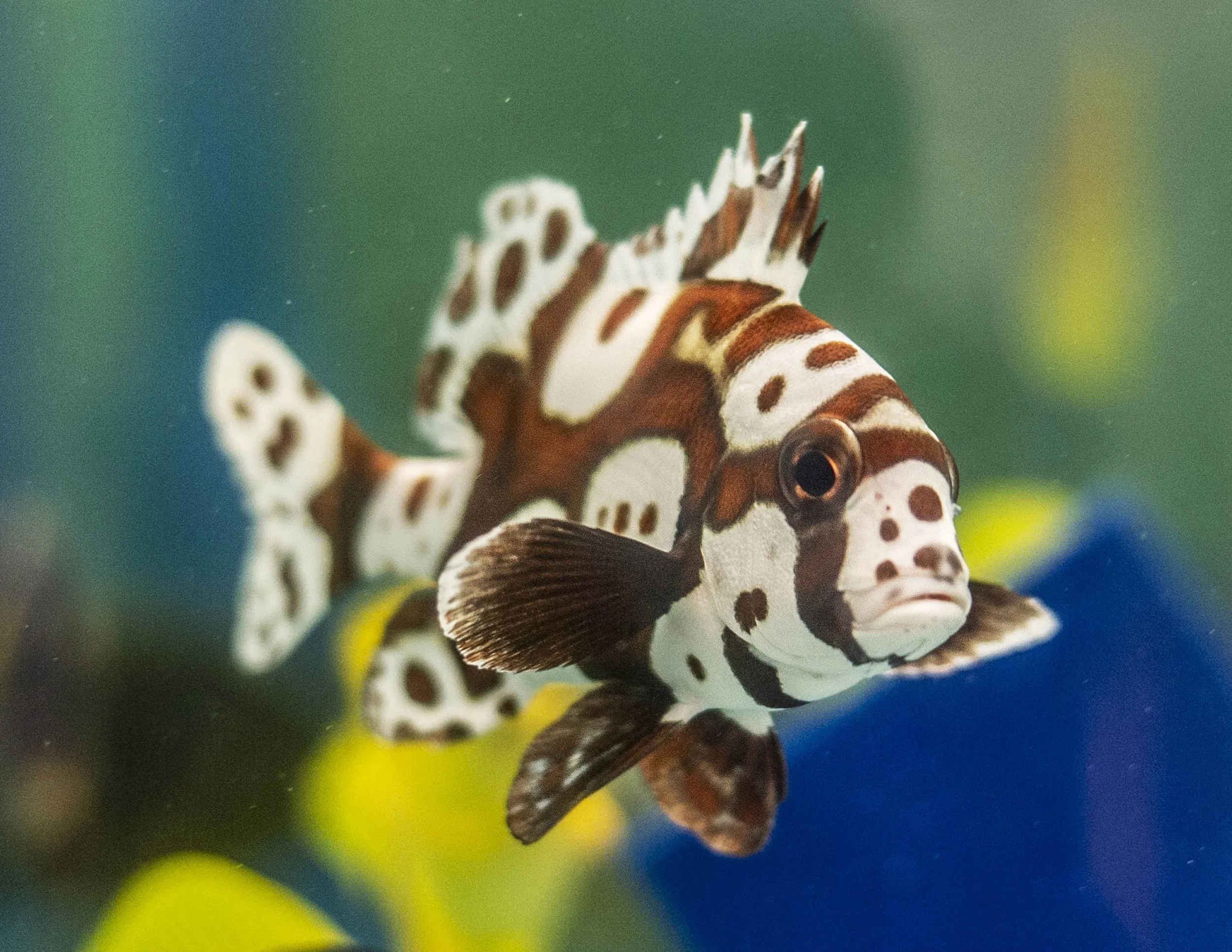
Spotted sweetlips are primarily nocturnal reef fish that spend much of the day sheltering beneath ledges, inside caves, or among coral structures before becoming more active at night to forage. Adults are usually solitary or found in small groups, while juveniles display highly distinctive appearances and behaviors that differ dramatically from mature fish. Young spotted sweetlips have dark bodies covered in bright spots and swim with a fluid, undulating motion that mimics drifting flatworms or floating debris, helping camouflage them from predators. Their juvenile coloration and movement are so unusual that they were once believed to be a separate species from the adults. As they mature, they undergo a dramatic transformation into pale, densely spotted fish with large fleshy lips, which inspired the name “sweetlips.” They reproduce by releasing eggs into open water, where larvae drift in the plankton before eventually settling onto coral reefs. Their strong vision and nocturnal foraging abilities make them well adapted to life in complex reef environments.
Habitat
Spotted sweetlips inhabit coral-rich reef systems throughout the Indo-Pacific region, including the Red Sea, East Africa, Southeast Asia, Northern Australia, and Pacific island reefs. They are commonly found around coral reefs, lagoon reefs, and sheltered reef slopes. Juveniles are typically seen in shallow reef flats and protected coastal areas, then tend to move into deeper reef environments as they mature.
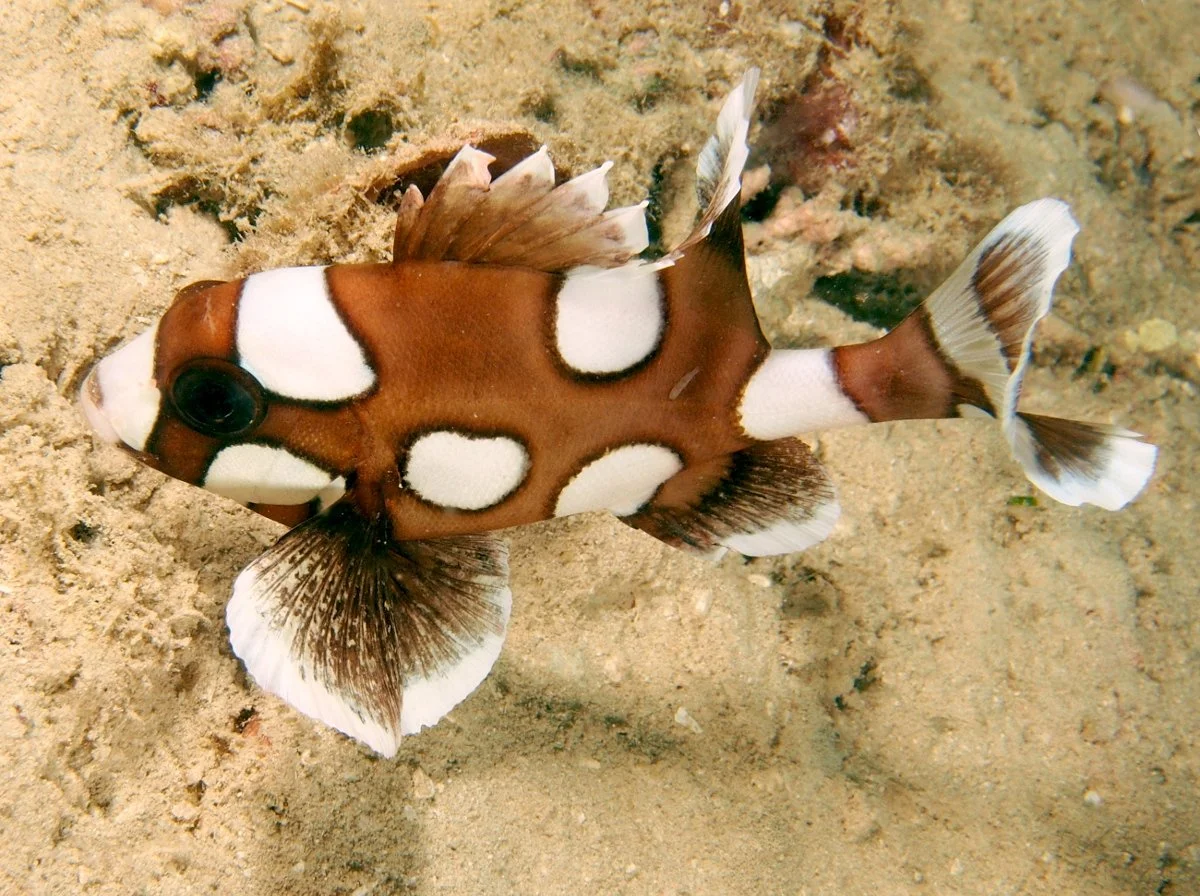
Juvenile Spotted Sweet Lips
Common Name
Spotted Sweetlips, Harlequin Sweetlips or Clown Sweetlips
Scientific Name
Plectorhinchus chaetodonoides
Classification
Family: Haemulidae (grunts)
Genus: Plectorhinchus
Species: P. chaetodonoides
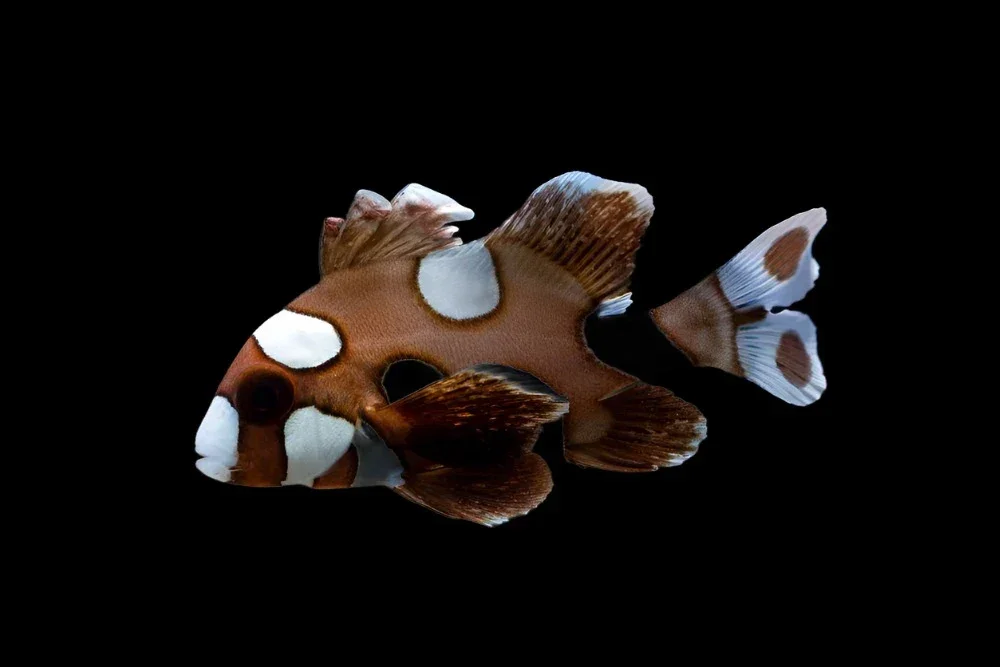
Diet
They are carnivorous and forage mainly at night along the reef floor, feeding on crustaceans, mollusks, and worms.
Size
Their average length is 12–20 inches, but can grow up to around 35 inches.
Lifespan
The estimated lifespan of a Spotted Sweet Lips in the wild is around 10–15 years, but live longer in protected conditions.
Conservation Status
Spotted sweetlips are currently listed by the IUCN as a species of Least Concern, though local populations may still be affected by coral reef degradation, habitat loss, pollution, and overfishing in some regions. Because they rely heavily on healthy reef ecosystems throughout their life cycle, long-term reef decline may impact future populations.