
Ranitomeya
Discovery
The genus Ranitomeya has undergone several taxonomic revisions throughout its scientific history. Many species within the group were originally classified under other poison dart frog genera, particularly Dendrobates, before being reorganized as scientific understanding of their relationships evolved. The genus name Ranitomeya was formally established in the early 2000s following genetic and morphological studies that distinguished these small “thumbnail” dart frogs from other poison frog groups.Although poison dart frogs have been known to Indigenous peoples of the Amazon for centuries, Western scientific documentation of these frogs began during the 19th and early 20th centuries through expeditions into South American rainforests.
Aposematic
Behavior
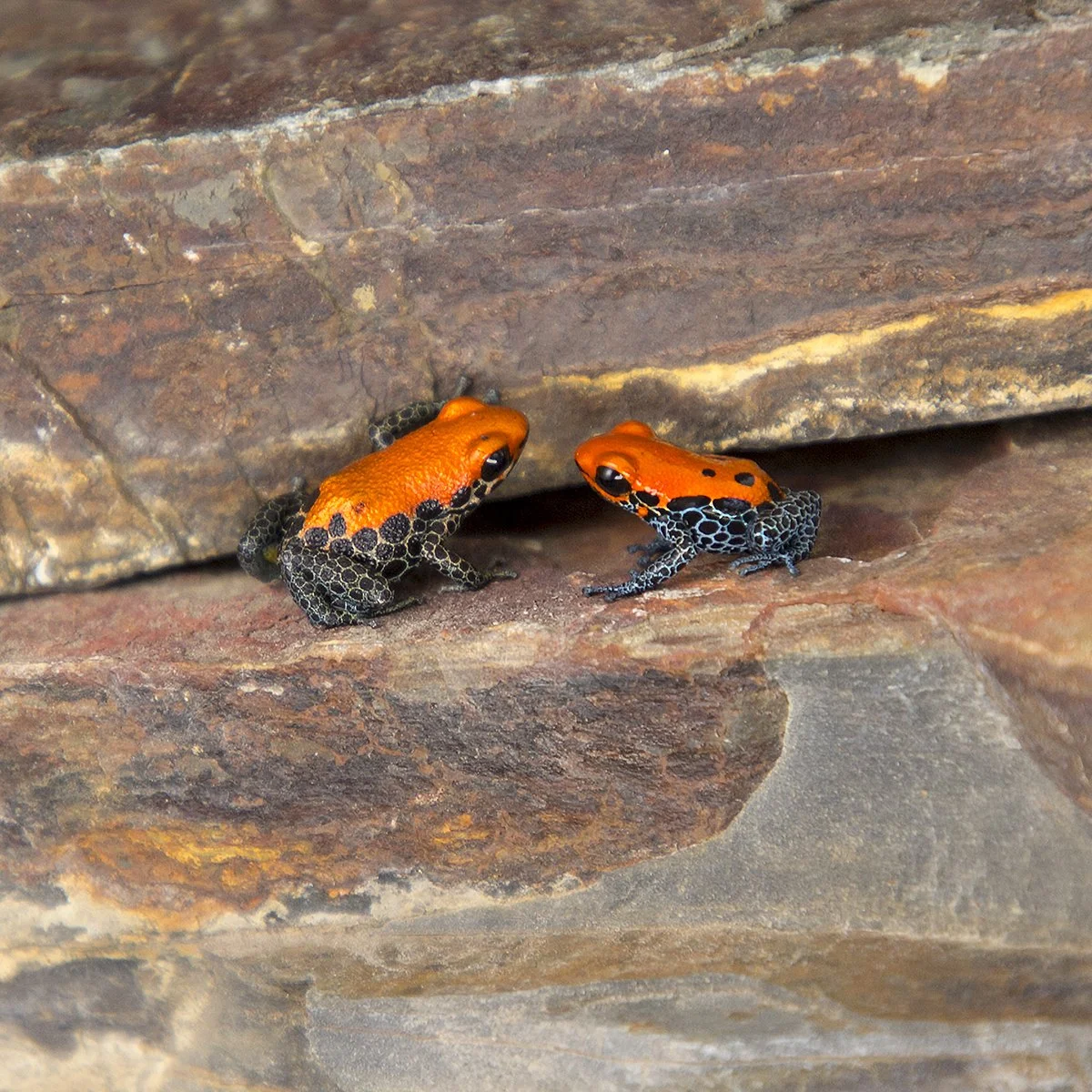
Ranitomeya dart frogs are small but highly active amphibians that are primarily diurnal, meaning they are most active during the day. Depending on the species, they may be arboreal or semi-arboreal, often living among leaf litter, low vegetation, and water-filled bromeliads within tropical rainforests. Males are especially territorial and use vocalizations to defend territory and attract mates. These frogs reproduce by laying eggs in small, protected locations such as plant cavities or damp leaf litter, and many species exhibit unusually advanced parental care for amphibians. Males frequently guard the eggs and transport individual tadpoles on their backs to tiny pools of water held inside bromeliads or other plants. Their bright coloration acts as aposematic warning coloration, signaling potential danger to predators. In the wild, their skin contains alkaloid toxins derived from their diet of ants and other small invertebrates, though toxicity levels vary between species and environments.
Habitat
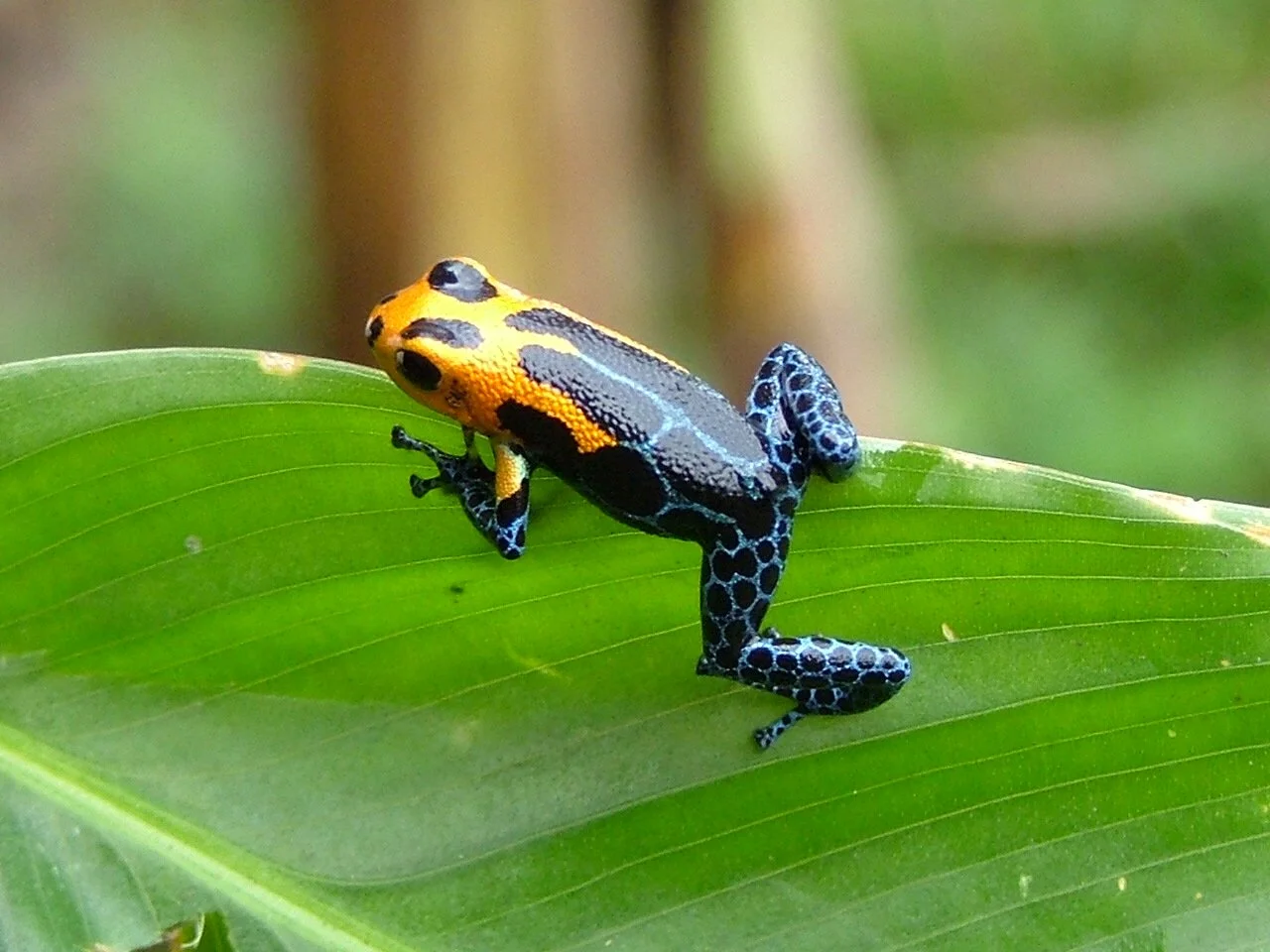
Ranitomeya species are found in South America, primarily in Peru, Colombia, Ecuador, and Brazil. They are present in the tropical rainforest ecosystems. They can be found in humid understory vegetation, bromeliads (water holding plants), dense foliage, and in small tree cavities. More often than not, they rely on spaces with small water pools rather than open bodies of water.
Common Name
Ranitomeya Dart Frogs or Thumbnail Dart Frogs
Scientific Name
Ranitomeya
Classification
Family: Dendrobatidae
Genus: Ranitomeya
Ranitomeya is a genus within the poison dart frog family, containing multiple small, brightly colored species.
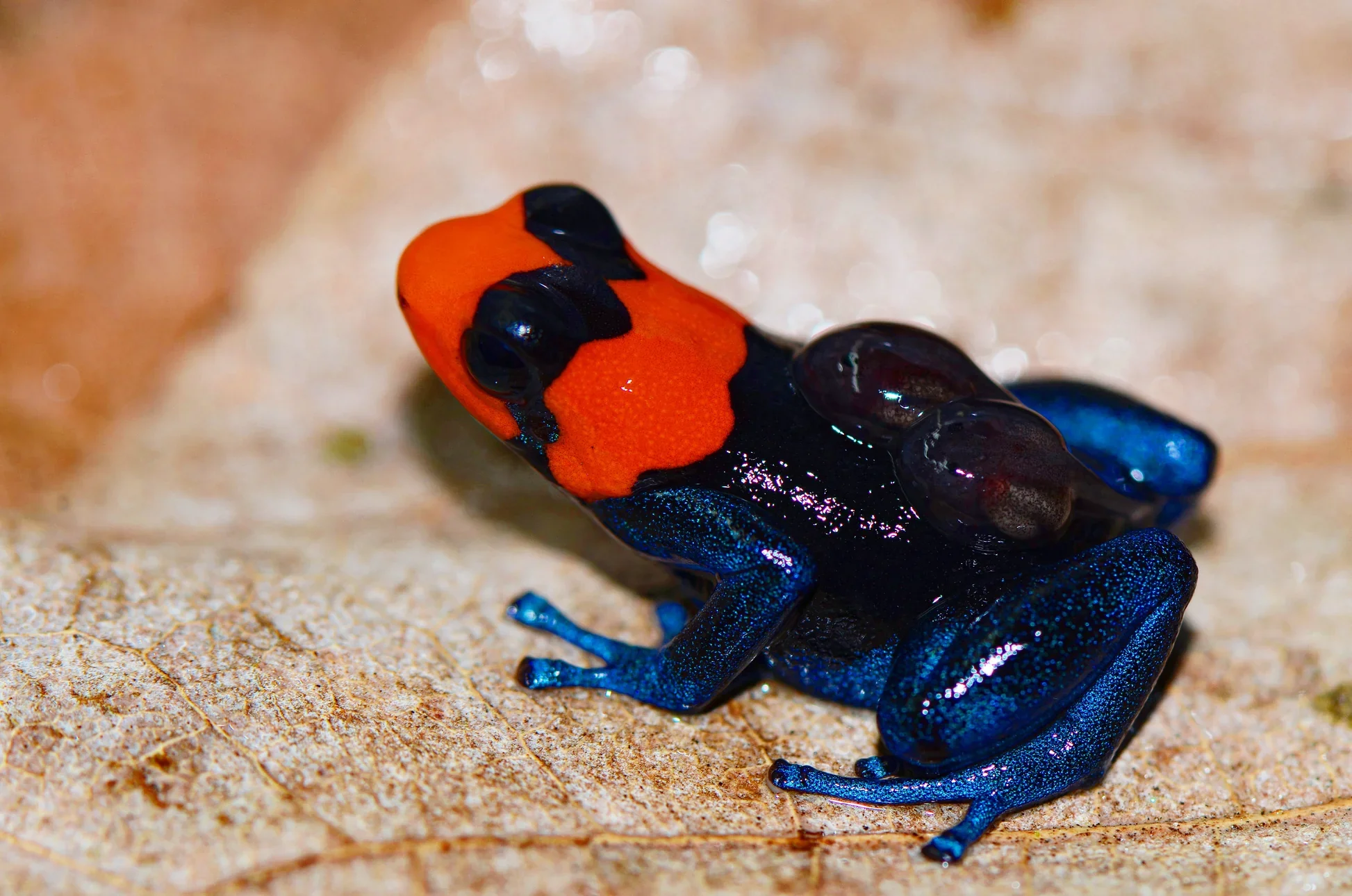
Ranitomeya transporting tadpoles on his back.
Diet
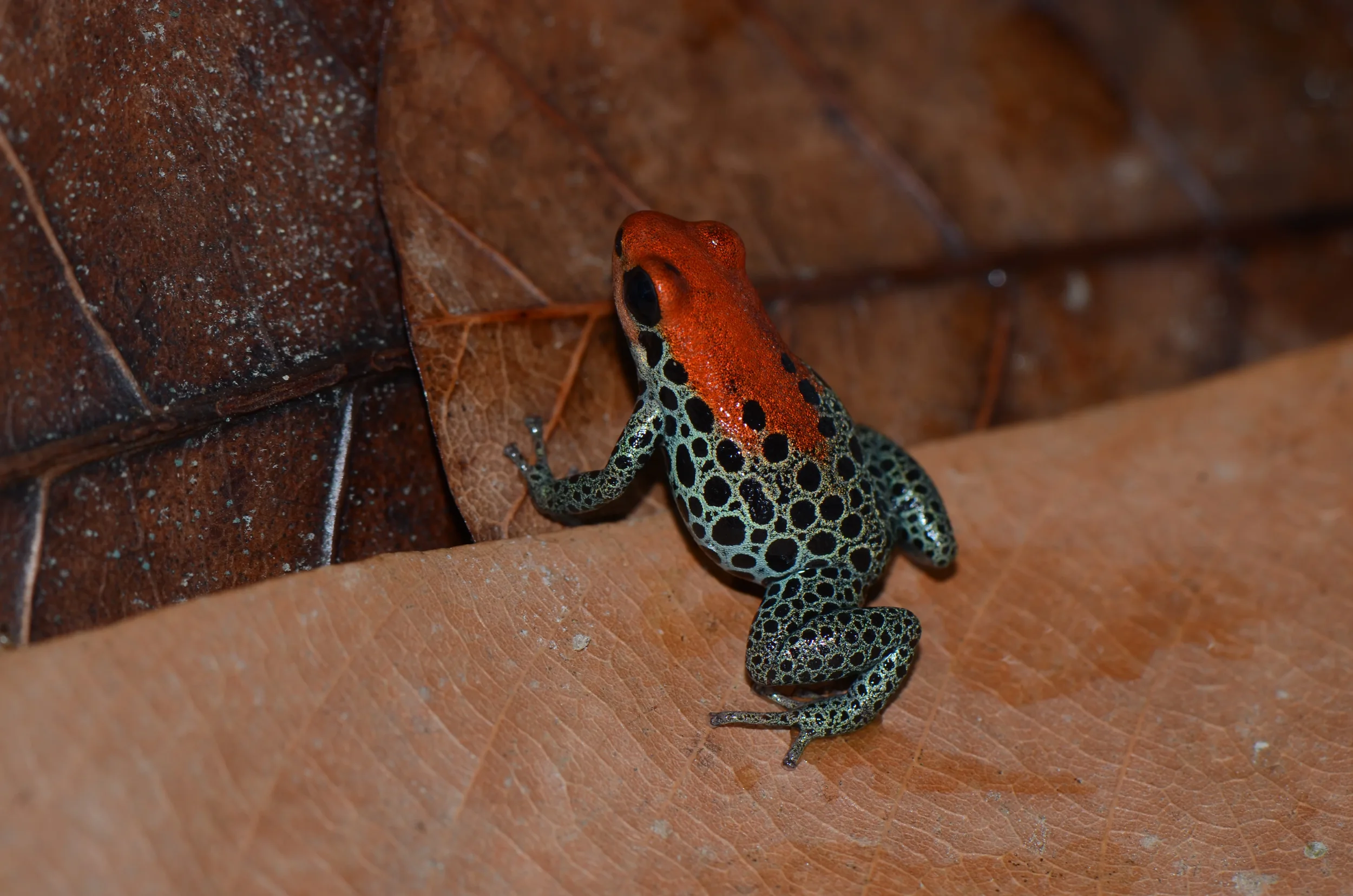
They are carnivorous and mostly eat ants, mites and termites. Their diet contributes to their skin toxins.
Size
The Ranitomeya is among the smallest of poison dart frogs, their average size being only 1.2-2 cm depending on the species.
Lifespan
In the wild, it’s estimated that they live around 4-8 years. However they can live up to 10+ years in captivity with proper care.
Conservation Status
Population status is not individually assessed for many species and are generally not considered threatened due to wide distribution. Although, local reef health impacts can affect colony health.