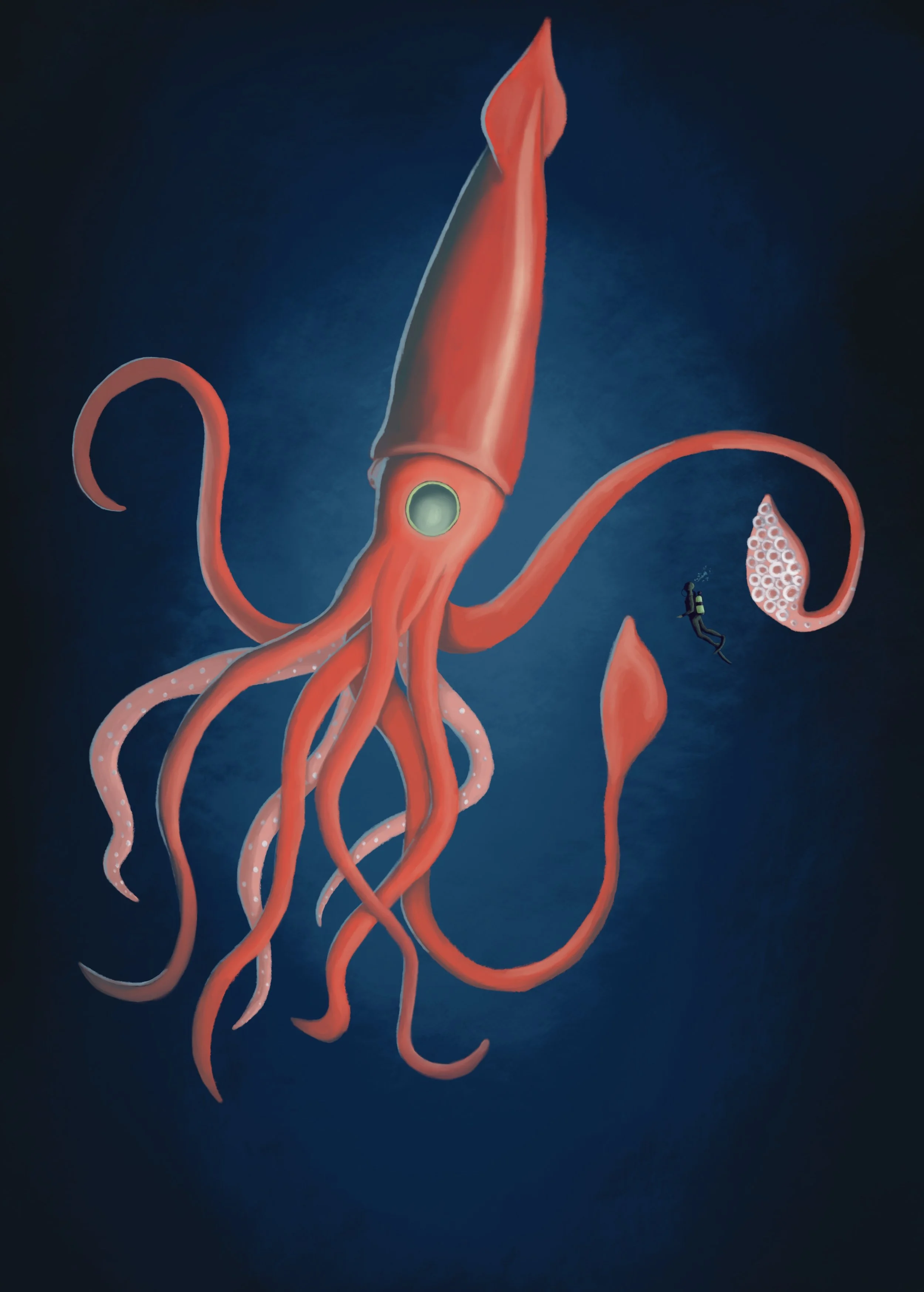
Giant Squid
Discovery
The giant squid was first formally described in 1857 by Danish zoologist Japetus Steenstrup. Their enormous size and rarity contributed to centuries of myths and sea monster legends surrounding deep ocean creatures.
Eye to Eye
Behavior
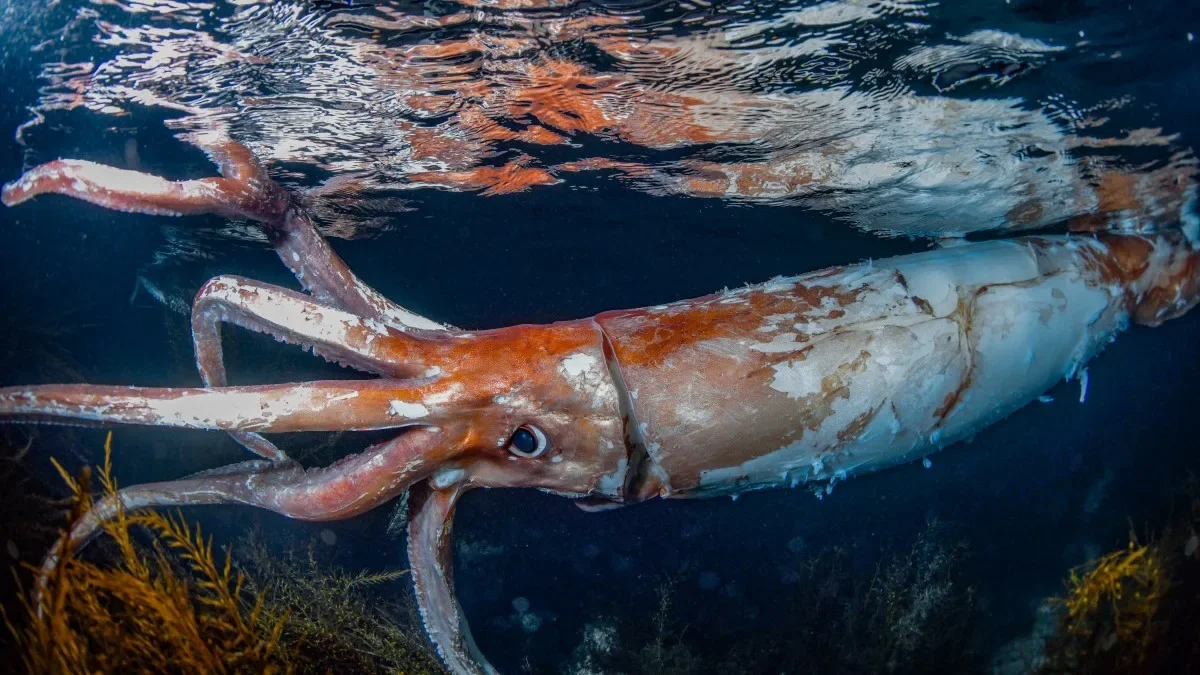
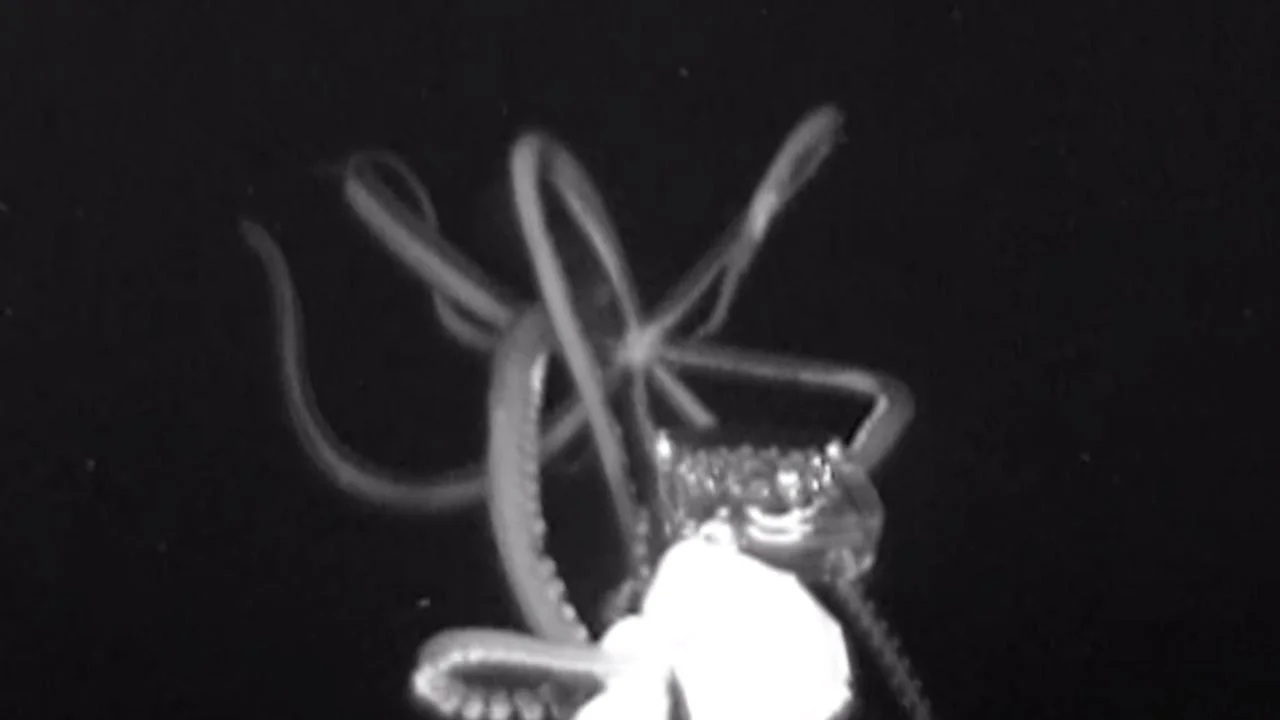
Giant squid are elusive deep-sea animals that are believed to live primarily solitary lives in the dark waters of the open ocean. Although they likely move slowly much of the time, they are capable of rapid bursts of speed using jet propulsion generated through a siphon. They hunt using an ambush-style strategy, extending two long feeding tentacles to seize prey before drawing it toward eight shorter arms lined with powerful suckers. Prey is consumed using a sharp, beak-like mouth and a radula, a toothed tongue-like structure used to help break down food. Giant squid possess some of the largest eyes in the animal kingdom, allowing them to detect movement and faint light in the deep sea. Their highly developed sensory systems help them respond to pressure changes, water movement, and nearby predators such as sperm whales, their primary known predator. Because they inhabit such extreme depths, giant squid are rarely observed alive, and much of what scientists know about them has come from stranded specimens, remains found in whale stomachs, and rare deep-sea encounters.
Habitat
Giant squid inhabit deep ocean waters worldwide, including the Atlantic, Pacific, and Indian Oceans. They are most commonly associated with deep offshore environments and continental slope regions, typically living within mesopelagic to bathypelagic zones at depths ranging from approximately 300 to over 1,000 meters. Because they spend nearly their entire lives in the deep sea, giant squid are rarely observed alive in their natural habitat. Individuals occasionally appear closer to the surface when sick, injured, dying, or during interactions with predators such as sperm whales.
Common Name
Giant squid or Deep-Sea Squid
Scientific Name
Architeuthis dux
Classification
Phylum: Mollusca
Class: Cephalopoda
Order: Oegopsida
Family: Architeuthidae
Genus: Architeuthis
Diet
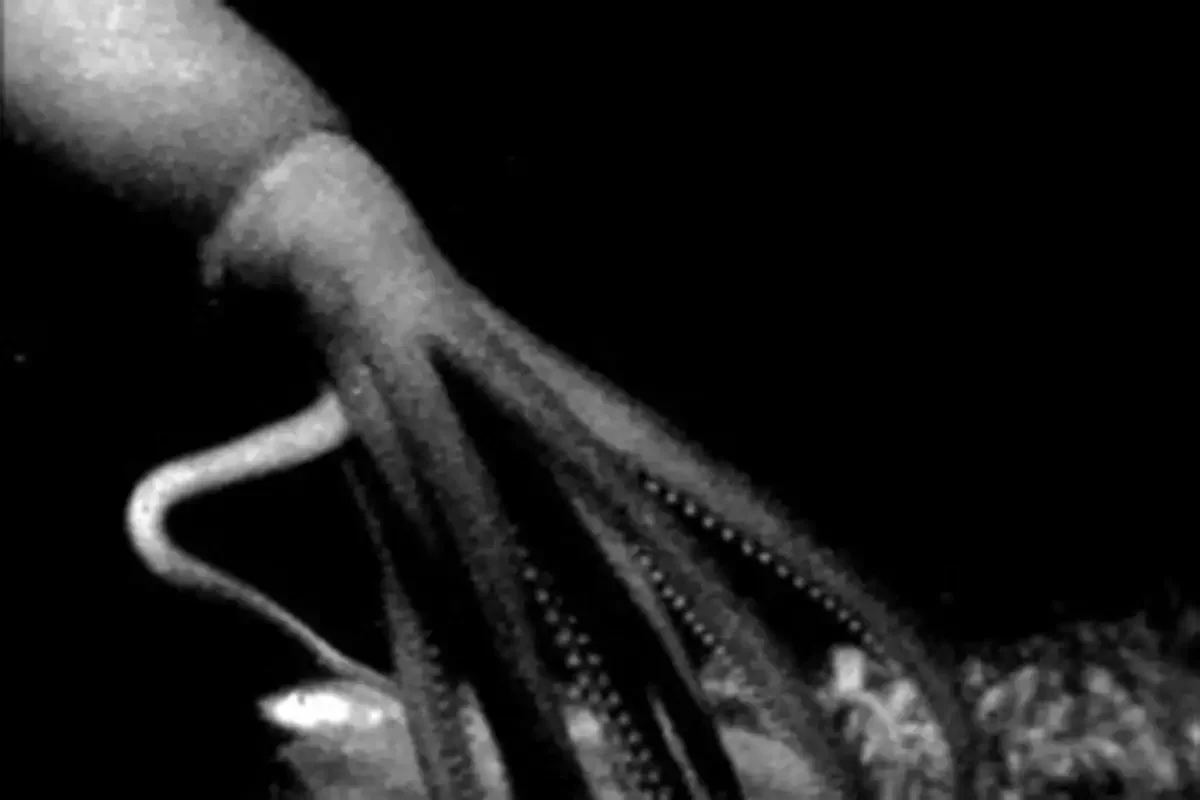
Giant squid are carnivorous predators that feed primarily on deep-sea fish and other squid species, though juveniles may also consume crustaceans. They are active hunters within deep ocean ecosystems, using their long feeding tentacles to capture prey before pulling it toward their powerful beak.
Size
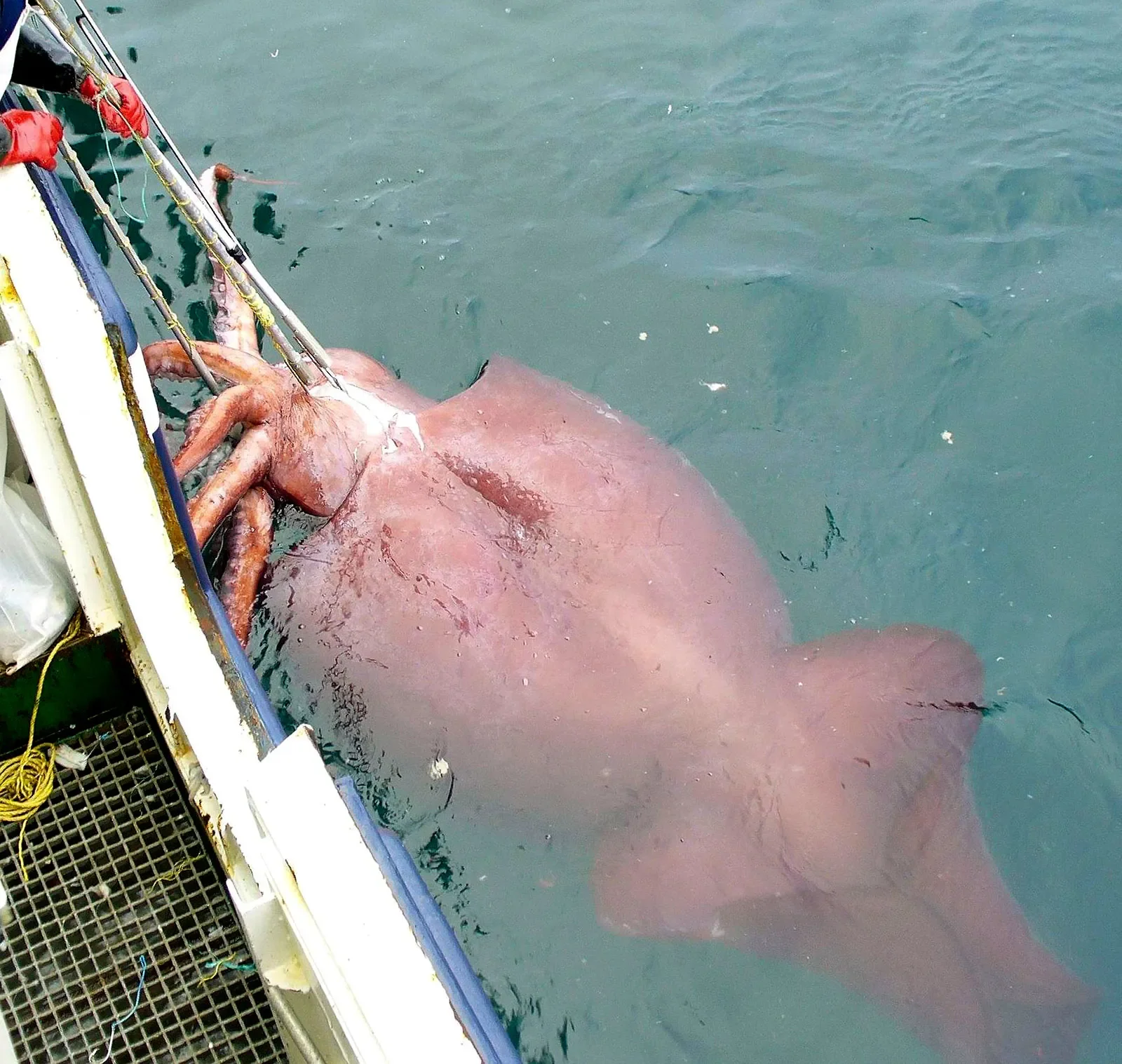
Female giant squid can reach total lengths of approximately 40–43 feet, while males tend to be somewhat smaller. Much of this length comes from their exceptionally long feeding tentacles. The mantle, or main body section, usually measures around 7–10 feet in length.
Lifespan
The exact lifespan of giant squid is still uncertain due to the difficulty of observing them in the wild, but scientists estimate they may live between approximately 5 and 15 years.
Conservation Status
The population status of giant squid remains poorly understood due to the difficulty of studying deep-sea populations, and the species is currently considered Data Deficient. While there is no clear evidence of major population decline, giant squid may be affected by ocean pollution and environmental changes impacting deep ocean ecosystems.