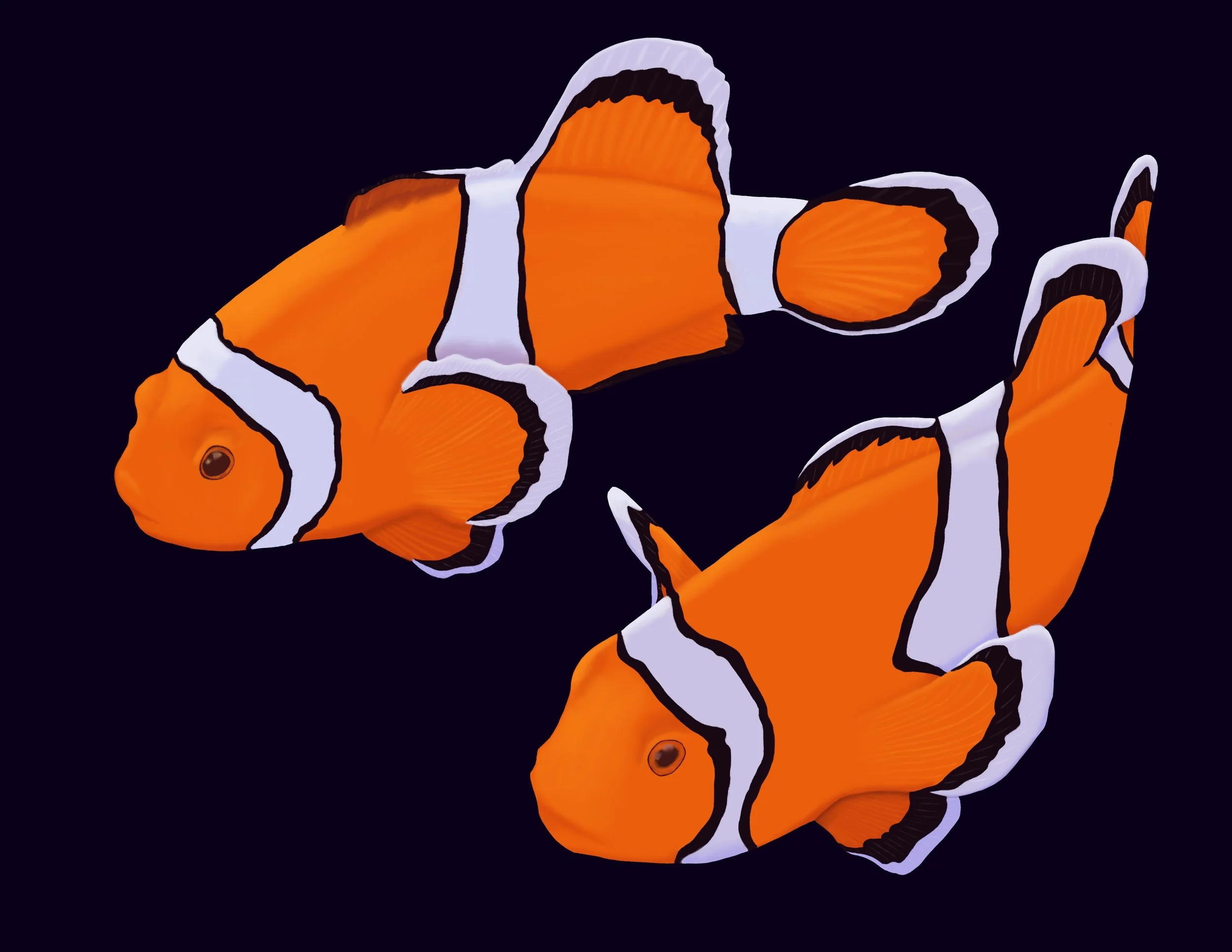
Clown Fish
Discovery
They were first formally described in 1830 by Georges Cuvier. They’re widely studied to to their symbiotic relationship and popularity in aquariums.
Native Range
Common clownfish are found in the Indo-Pacific region, which includes the Western Pacific Ocean, Eastern Indian Ocean, and the waters around Southeast Asia and Northern Australia.
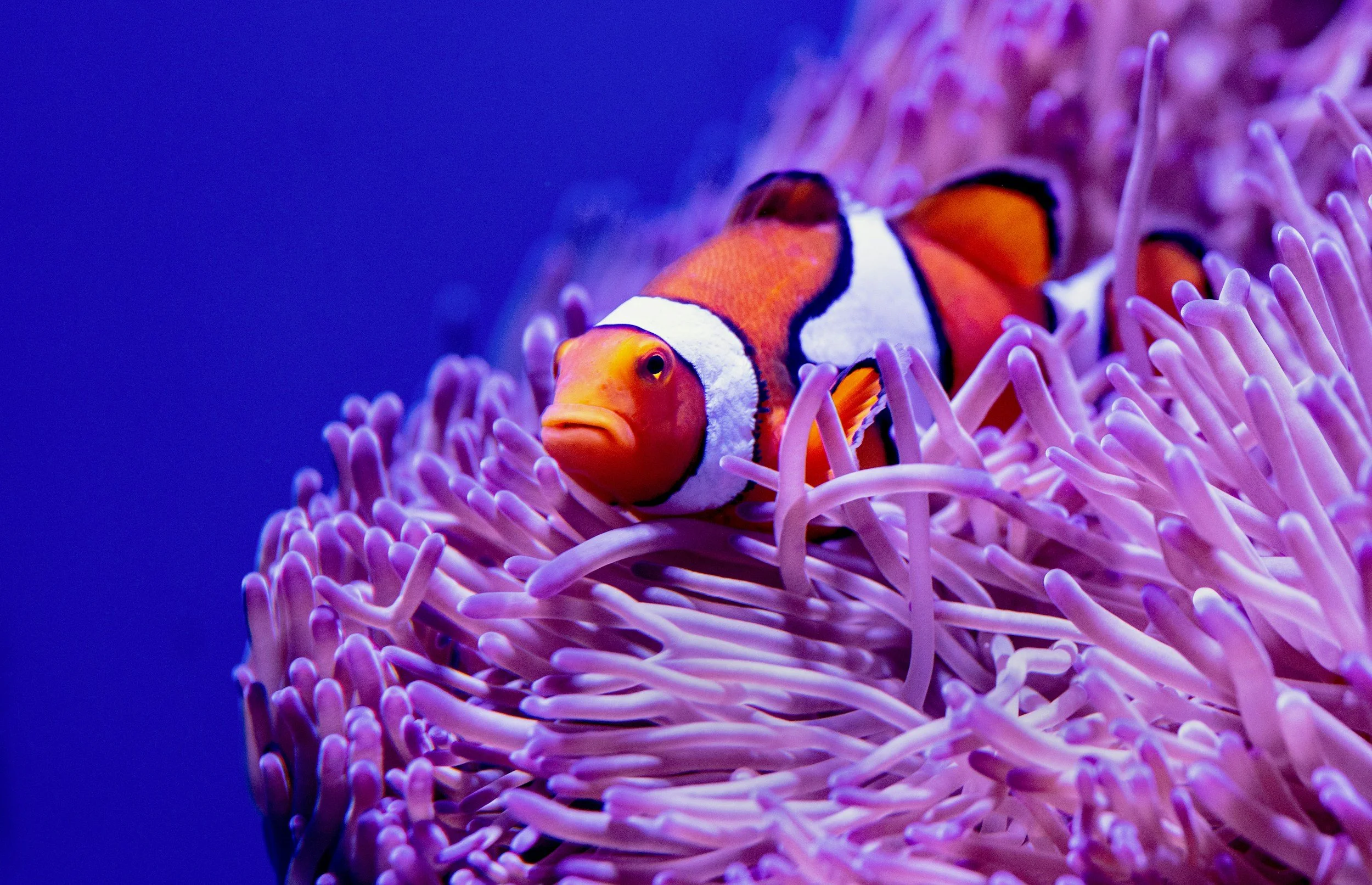
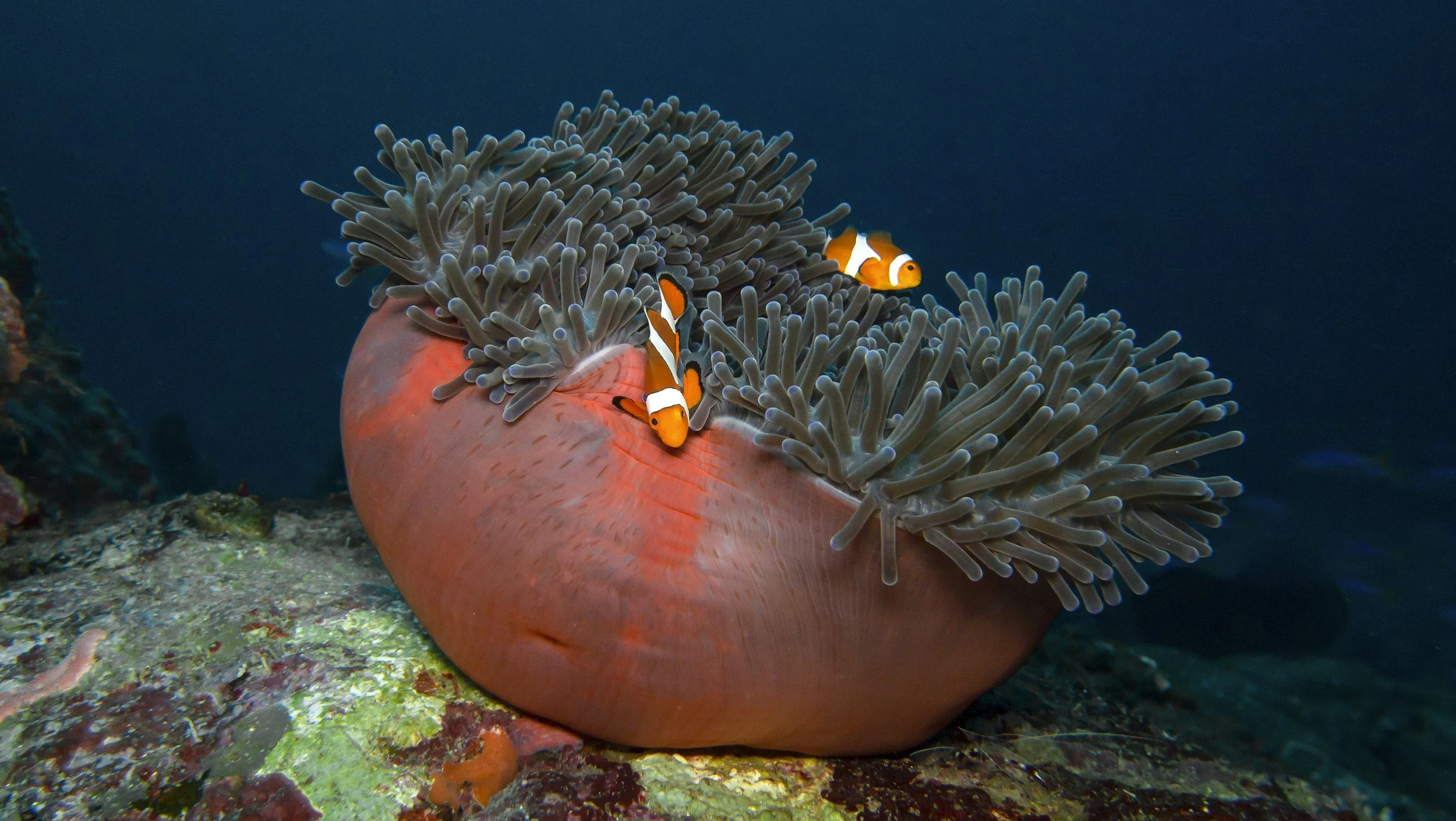
They are almost always found living among sea anemones, which provide protection. Usually around warm coral reefs, shallow lagoons and protected reef slopes.
A Perfect Pair
Behavior
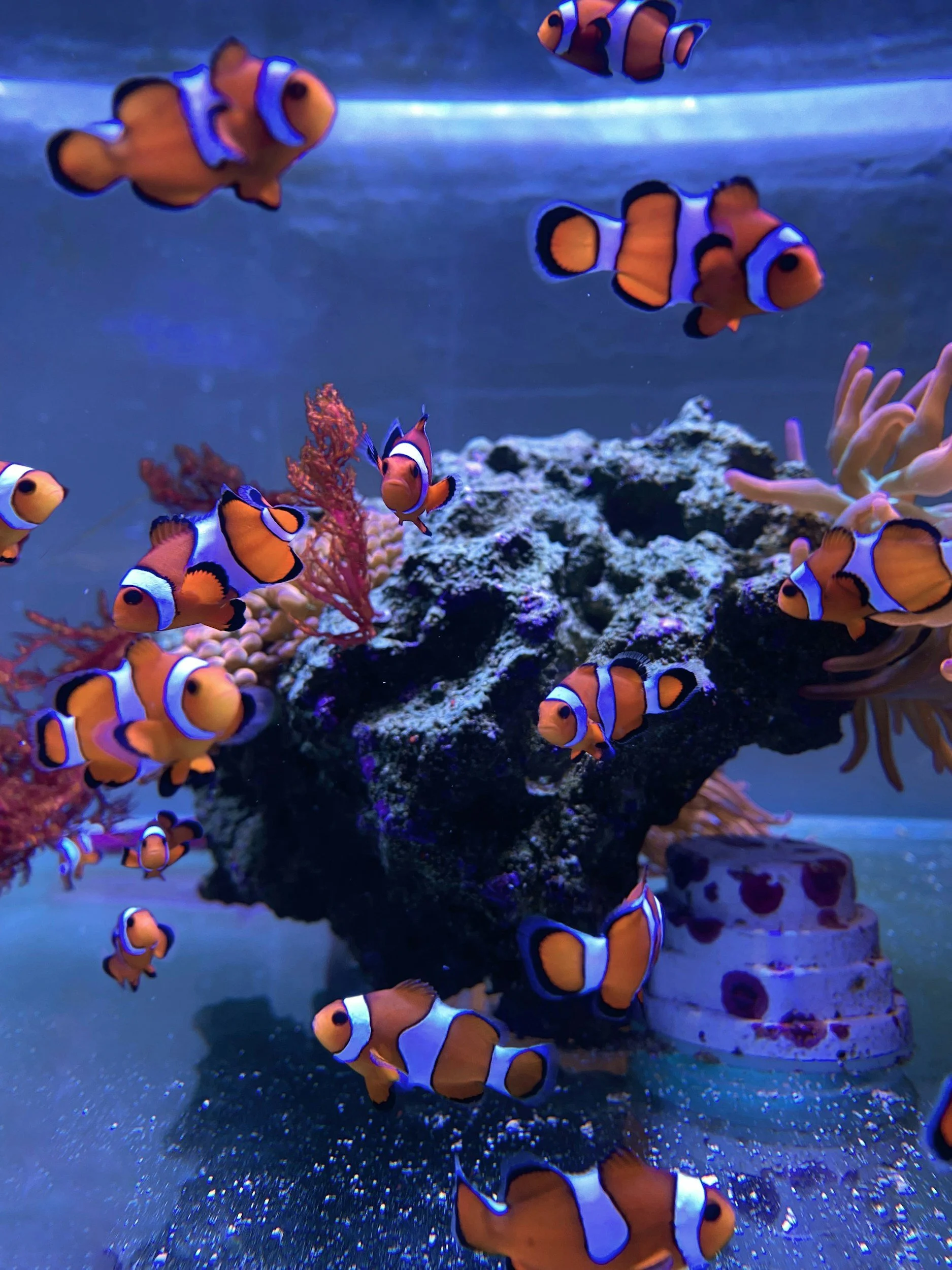
Clown Fish live in a symbiotic (mutual) relationship with sea anemones. The anemone protects the clownfish with its stinging tentacles, and the clownfish provides nutrients through waste and food scraps. They also help to keep the anemone clean and in some cases, may defend it from predators. They are territorial around their host anemone, and in the wild live in social groups with a strict social hierarchy. All Clown Fish are born male, but the largest one becomes the breeding female, with the second largest becoming the breeding male. The rest of the social group remain non-breeding juveniles.
Common Name
Clown Fish or Ocellaris Clown Fish
Scientific Name
Amphiprion ocellaris
Classification
Family: Pomacentridae
Subfamily: Amphiprioninae
Genus: Amphiprion
Species: A. ocellaris
Diet
Clown Fish are omnivorous, feeding in short bursts close to their host anemone. They eat zooplankton, small crustaceans, algae, and food scraps from anemones.
Size
The average length of a Clown Fish is 2-4 inches, with females typically being larger than the males.
Lifespan
In the wild they can live to about 6-10 years, and in captivity with proper care they can live around 10-15+ years.
Conservation Status
The Clown Fish IUCN status is of least concern. However, localized populations can be affected by reef loss and climate change impacts.
Sensory Adaptations
Excellent vision for reef environments
Strong spatial memory (for navigating anemone territory)
Protective mucus layer that prevents anemone stings