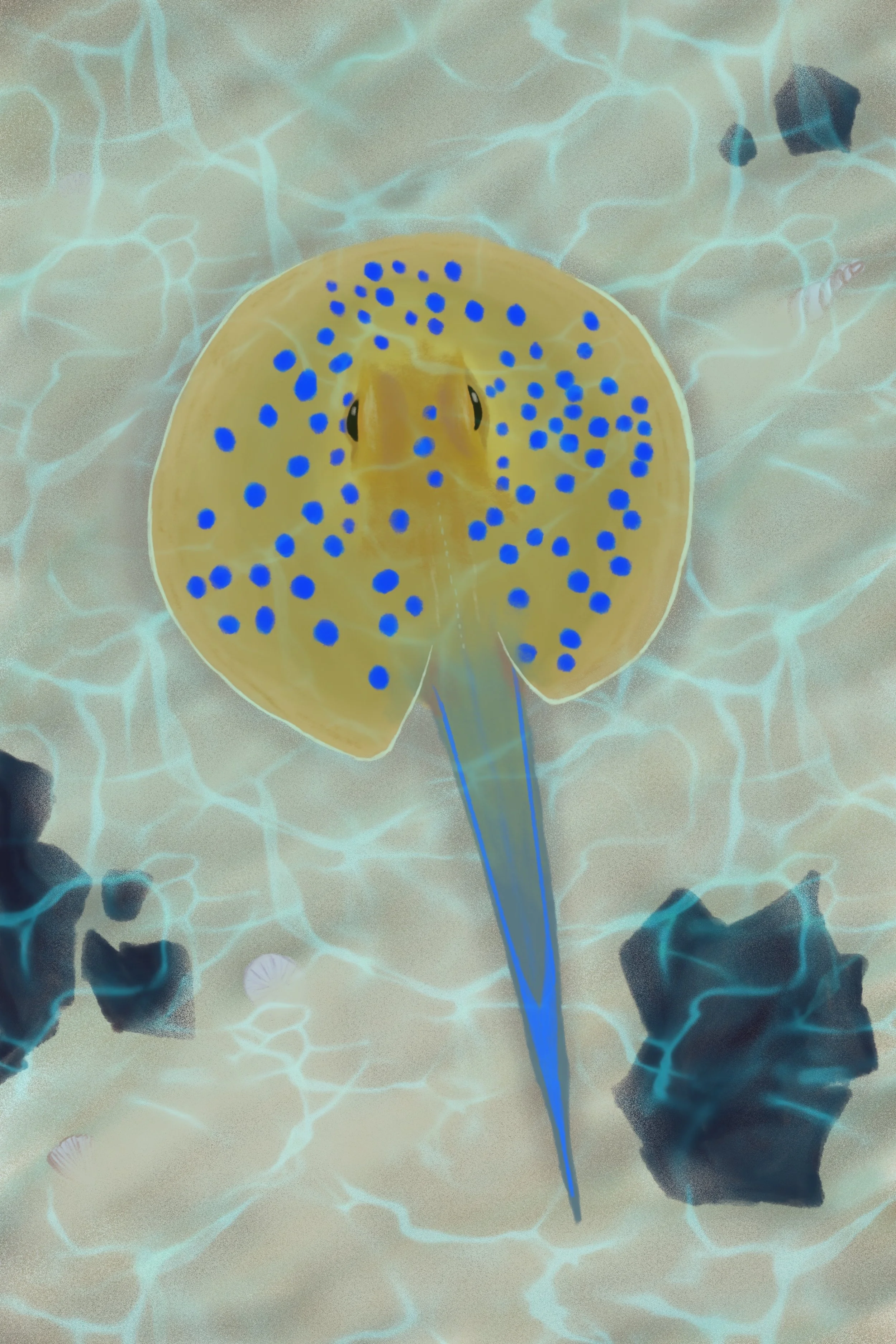
Blue-Spotted Stingray
Common Name
Blue-spotted stingray or Blue-spotted Ribbontail Ray
Scientific Name
Taeniura lymma
Classification
Family: Dasyatidae
Genus: Taeniura
Species: T. lymma
Ocean Confetti
Habitat
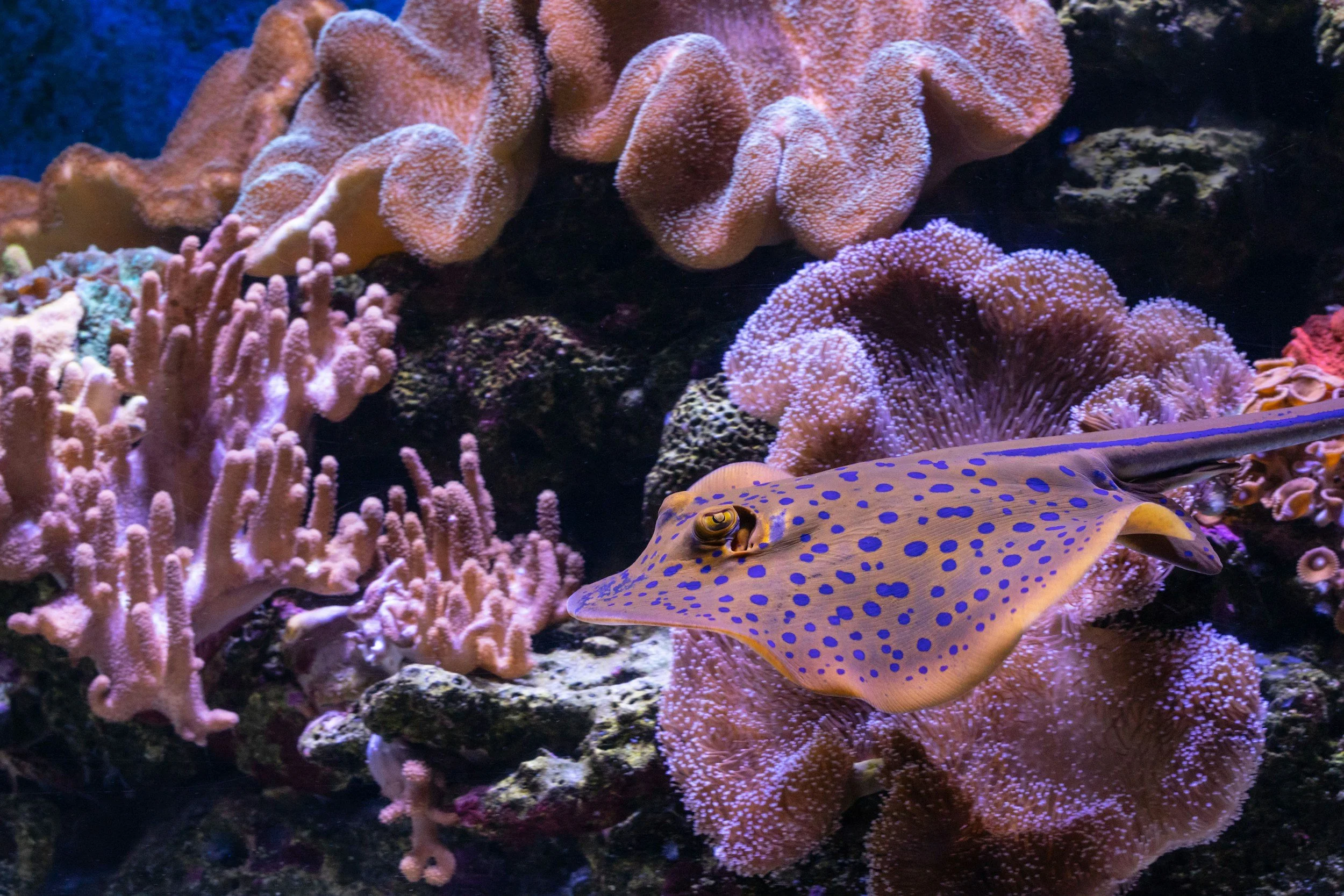
Blue-spotted stingrays are found in the Indo-Pacific region, which includes the Red Sea, and waters around East Africa, Southeast Asia and Northern Australia. They are typically associated with shallow coastal waters. They are found around coral reefs, sandy lagoons, seagrass beds, and shallow coastal flats. They often rest partially buried in sand during the day.
Discovery
They were first formally described in 1801 by Johann Gottlob Schneider. However, they have been long recognized in coastal Indo-Pacific marine ecosystems.
Behavior
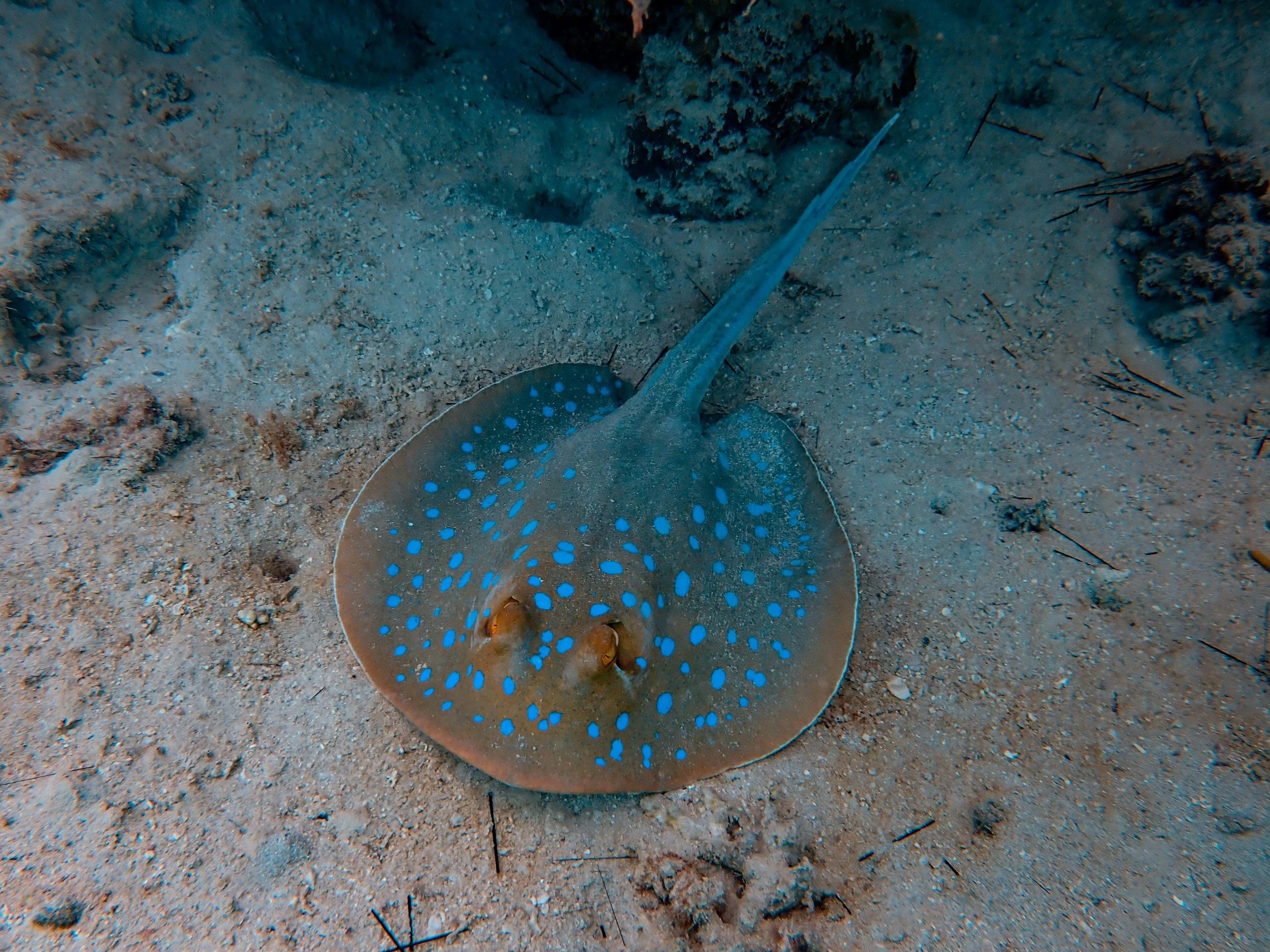
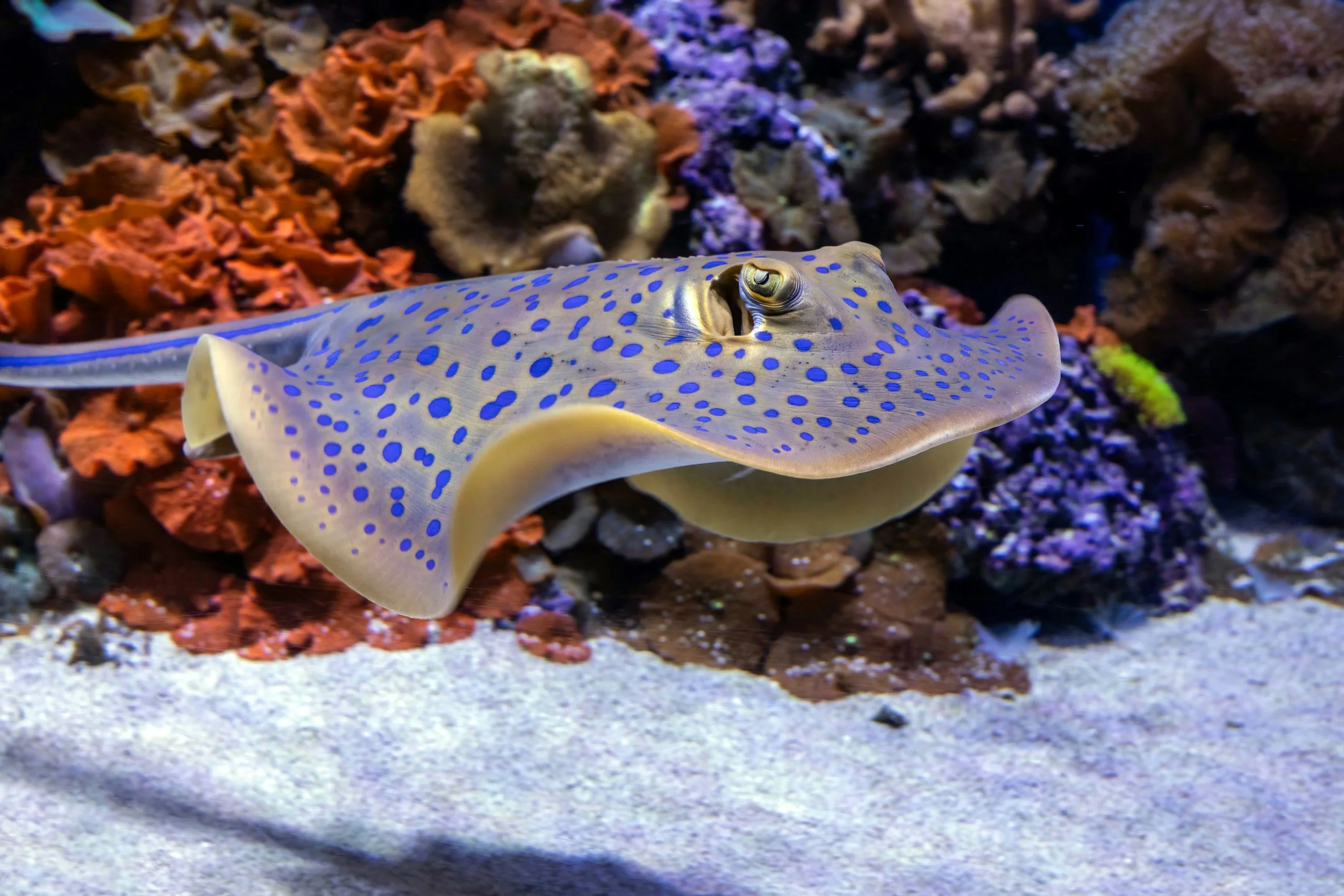
Blue-spotted stingrays are typically active during the day and are most often seen resting on sandy bottoms near coral reefs, either alone or in small groups. They are excellent ambush predators, frequently burying themselves beneath the sand with only their eyes and spiracles exposed while waiting for prey. Their eyes are positioned on top of the body to maintain awareness while partially concealed, and they rely on electroreceptors and a strong sense of smell to detect prey hidden beneath the seafloor. Although generally calm and quick to flee when threatened, they possess a venomous spine on the tail used strictly for defense. Their vivid blue spotting may serve as both camouflage and warning coloration among reef environments, with the coloration often appearing brightest in juveniles. Despite being bottom-dwelling animals, their smooth swimming motion, which is created by the undulation of their pectoral fins, is often described as underwater flight.
Diet
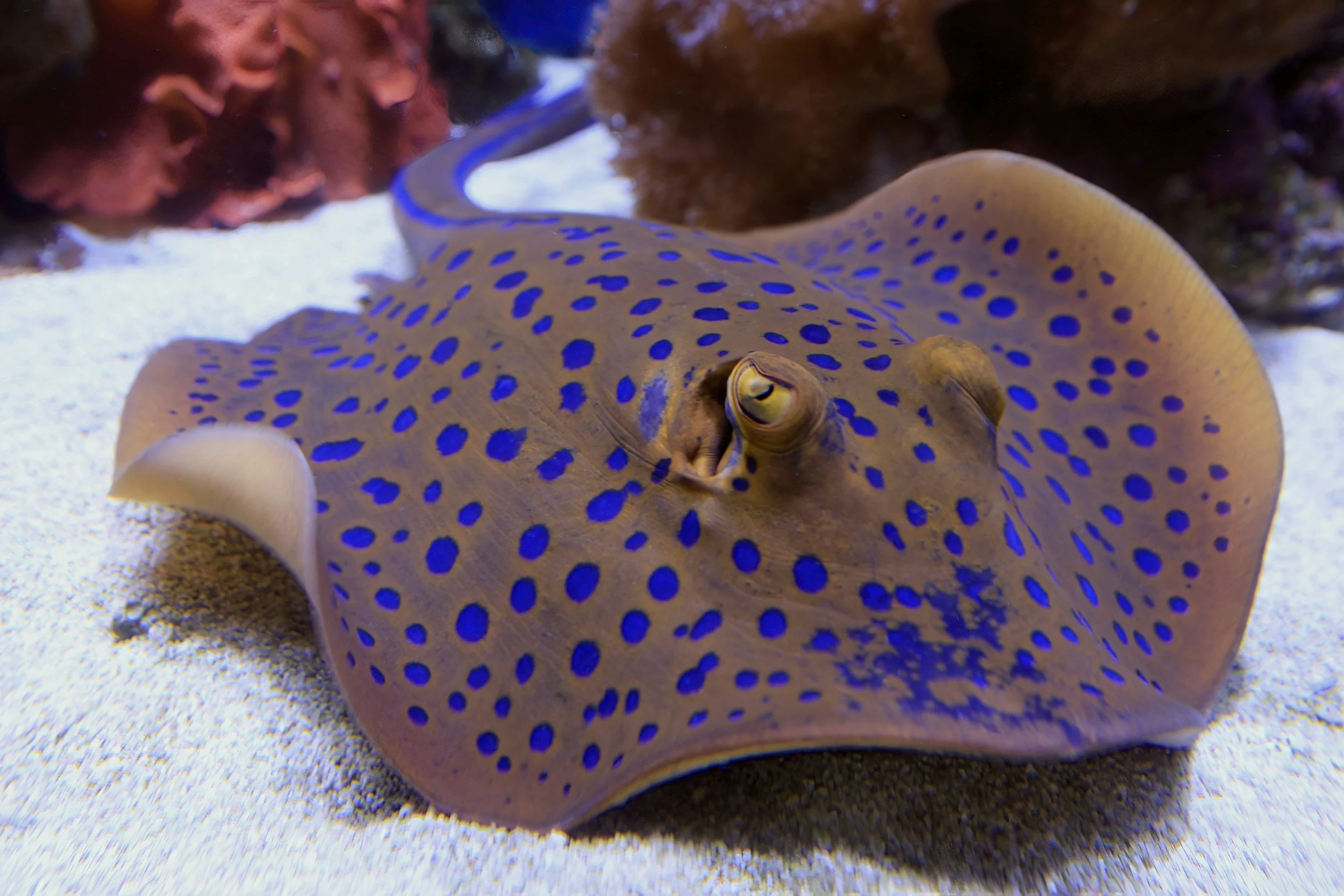
Blue-spotted stingrays are carnivorous bottom feeders. They eat crabs, shrimp, small mollusks, worms, and small benthic invertebrates. They use electroreception and smell to locate prey buried in sediment.
Size
Blue Spotted Stingray’s disc width can get up to around 14-16 inches, and a total length (including tail) of up to around 35 inches
Lifespan
Their estimated wild lifespan is about 10–15 years, which can vary depending on predation and environmental conditions.
Conservation Status
Their IUCN Status is Near Threatened. Threats to their population include habitat degradation, bycatch in fisheries and overfishing in parts of its habitat range.