BALL PYTHON
Discovery
Ball Pythons have been known in Western science since the 18th century, first formally described in 1758 by Carl Linnaeus, but they have been around much longer in indigenous ecological knowledge.
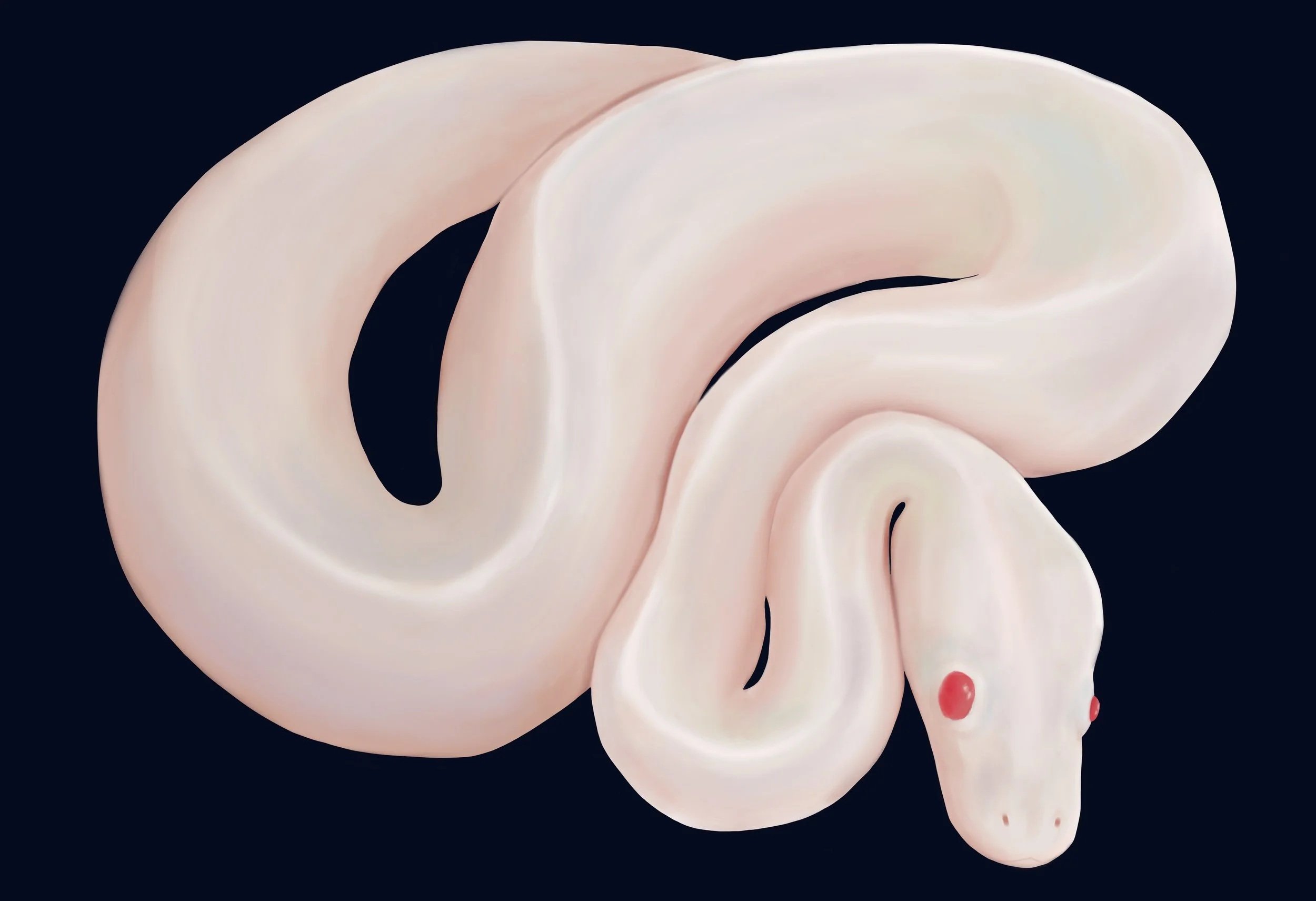
Pale in Comparison
Behavior
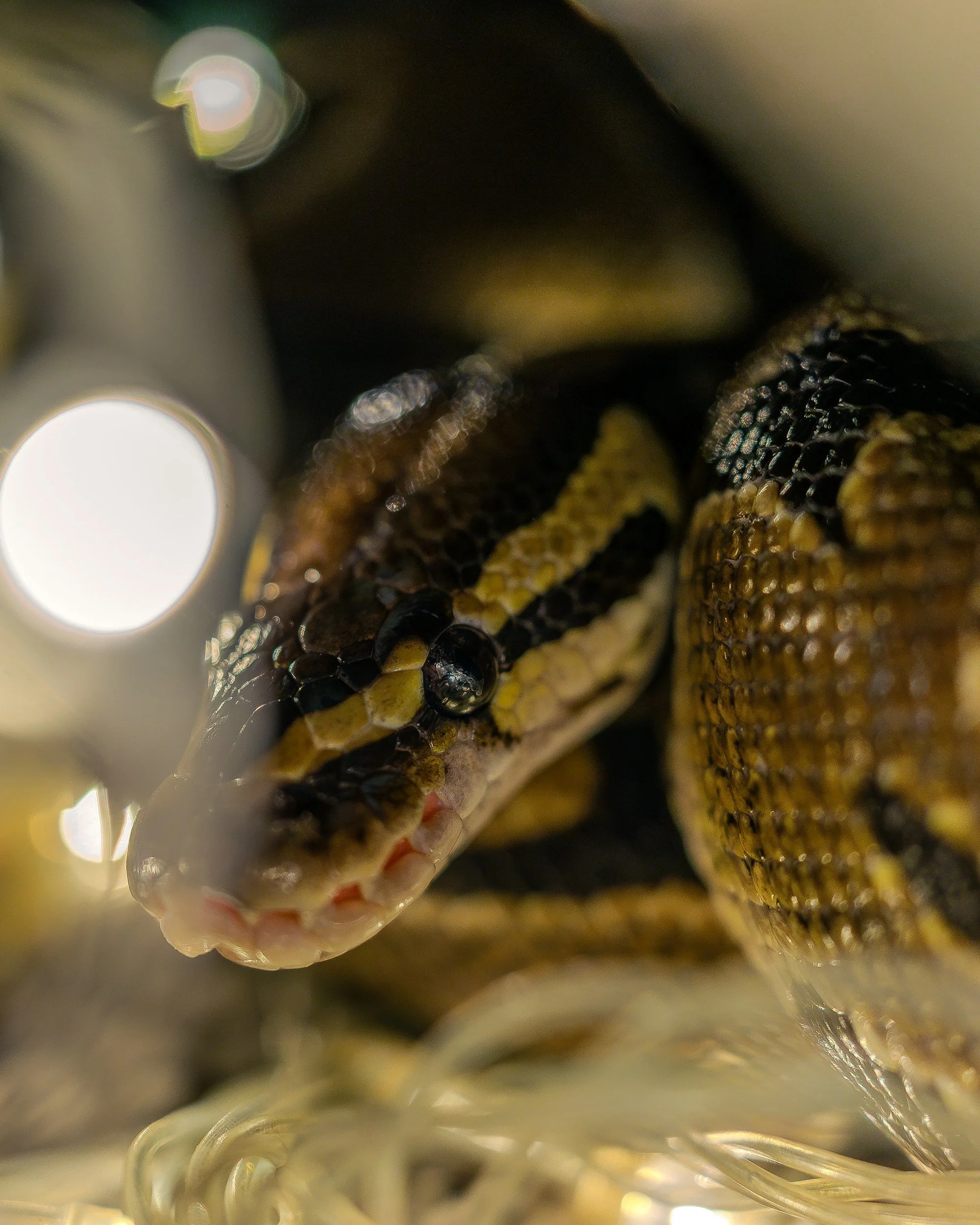
They are generally shy and non-aggressive snakes, and are known to curl into a tight ball when feeling threatened. They’re nocturnal, hunting at night slowly ambushing its prey.
Native Range
Ball pythons are native to sub-Saharan Africa, primarily in West Africa and Central Africa.
They typically inhabit savannas, grasslands, and lightly wooded areas, often staying close to ground cover and burrows.
They are mostly secretive, spending much of their time hidden.
Common Name
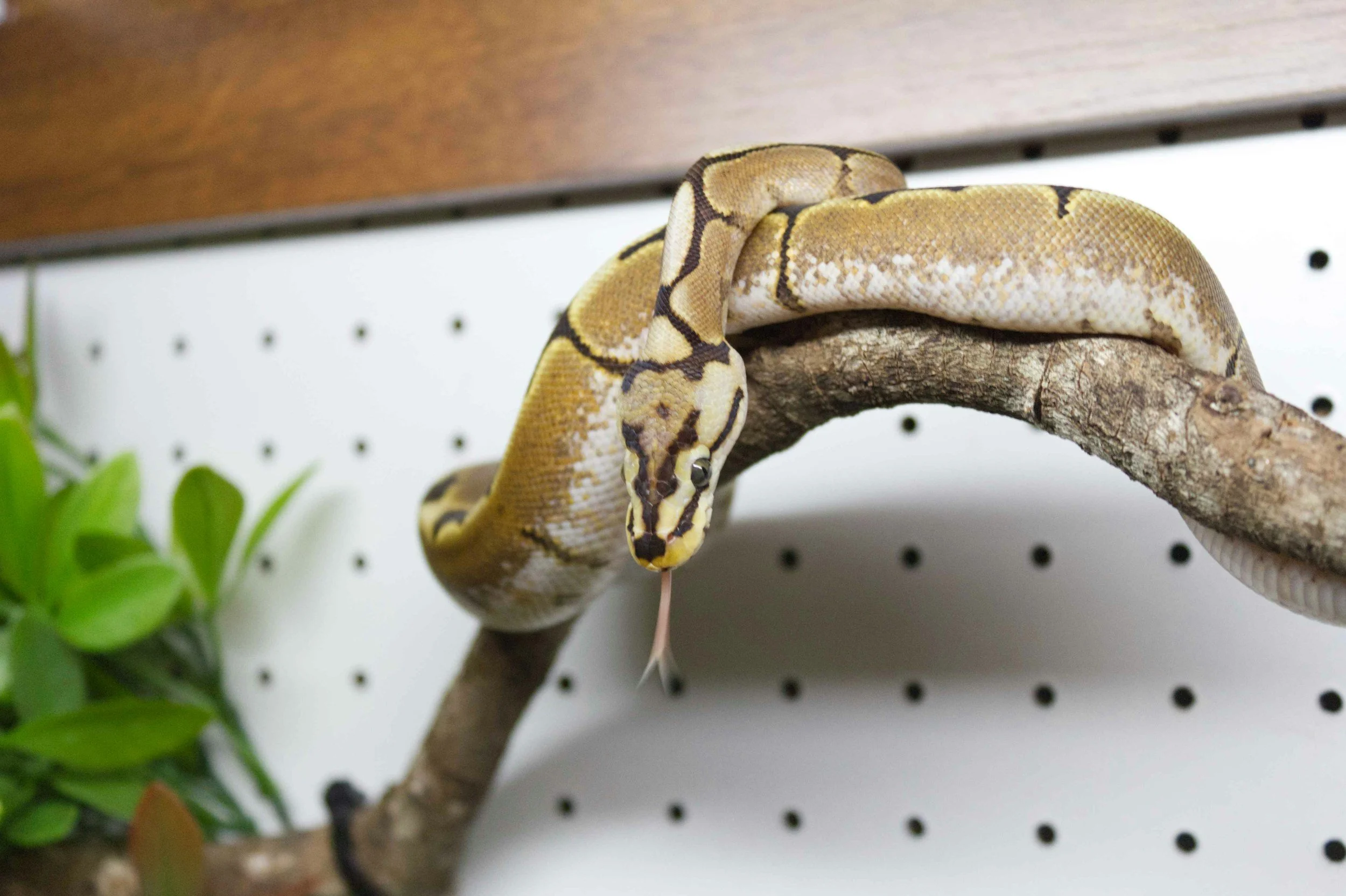
Ball Python or Royal Python
Scientific Name
Python regius
Classification
Family: Pythonidae
Genus: Python
Species: P. regius
Diet
Ball pythons are carnivorous and non-venomous constrictors. They eat small mammals and occasionally birds
They ambush prey and use constriction to subdue it before swallowing it whole.
Size
Their average length is 3–5 ft, with females typically being larger than males.
Lifespan
A wild Ball Python’s lifespan is about 10-15 years, whereas in captivity with proper care, they can live 20-30+ years.
Conservation Status
The IUCN has them listed as Near Threatened, due to habitat loss, overcollection for the pet trade, and hunting for meat and skin in some regions.
Sensory Adaptations
Heat-sensing pits along the upper jaw (detect infrared radiation)
Strong sense of smell via Jacobson’s organ
Poor eyesight compared to mammals, but effective in low-light environments